Connecting the Work of the Holy Spirit and Spiritual Growth
The most popular subject which obtains the most views on this website is the subject of the Holy Spirit. This along with the current rise in the interest in spiritual growth are the basis for this article. There seems to be a growing thirst for knowledge on the doctrine of the Holy Spirit and for sound biblical teaching on spiritual growth. Current research and polls indicate that there is a neglect of the teaching of proper church doctrine and essential teachings of the faith. Many churches have become shallow in preaching the gospel and in teaching the truth. This has left many Christians to cry out, “Feed us, we’re hungry!” Their spirits are not being nurtured and fed with the deep teachings of the Word of God. They also experience an emptiness in their spiritual life. What they are feeling is the lack of a spiritual bond with God. They have never been taught the Doctrine of the Union with Christ; by which they would receive spiritual nourishment from their connection to Christ, much like branches receive their existence from the vine, (John 15:1-10). They also lack the necessary relationship with the Holy Spirit who mediates the presence of Christ in their lives as explained by J.I. Packer.
“The essence of the Holy Spirit’s ministry, at this or any time in the Christian era is to mediate the presence of our Lord Jesus Christ.”
J.I. Packer, “Keep in Step with the Spirit.”
Foundational Concepts of Spiritual Growth
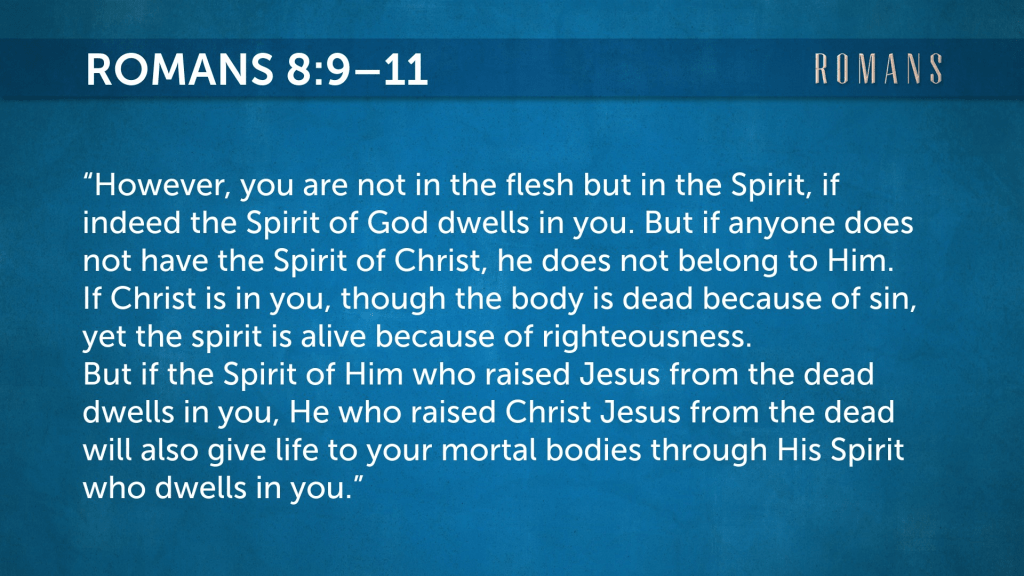
There are some fundamental biblical concepts that a believer must understand as they embark on their path to spiritual growth. To begin with, it is essential to understand that spiritual growth is the progressive sanctification process of the Christian as he/she grows from new believer to mature Christian. It is the process of transformation from existing as an unrepentant sinner to becoming Christlike in righteousness. In other religious and secular practices spiritual growth requires a person to look inward for power and wisdom that can be tapped into. Biblical teachings inform us that the heart and mind of a person is inclined toward evil and is polluted by sin. Righteousness and true wisdom are the attributes of God and can only come from His bestowed gift to us by faith. They are the outgrowth of the relationship with Christ and through the power and work of the Holy Spirit. This is the Apostle Paul’s teaching from the opening quote above, (Rom. 8:9-11). There are three points that Paul is making concerning the state of the believer in his sanctification.
- The first is that all believers have the Holy Spirit living in them because they belong to Christ.
- The second is that the believer is no longer inclined to the desires of the flesh but is now inclined to the desires of the Spirit because of righteousness.
- The last point is that the same Spirit who raised Christ from the dead also gives life to the believer who was spiritual dead but is now alive as a new creation in Christ.
With these points in mind the Christian can understand his position in relation to Christ and their relationship with the Holy Spirit who dwells in them. He will be their agent of transformation in their spiritual growth process. Note: (It may be helpful to read my posts; “The Holy Spirit,” and “Spiritual Growth: Growing Closer to God,” prior to this post for greater depth on the subject.)
Living and Walking by the Spirit
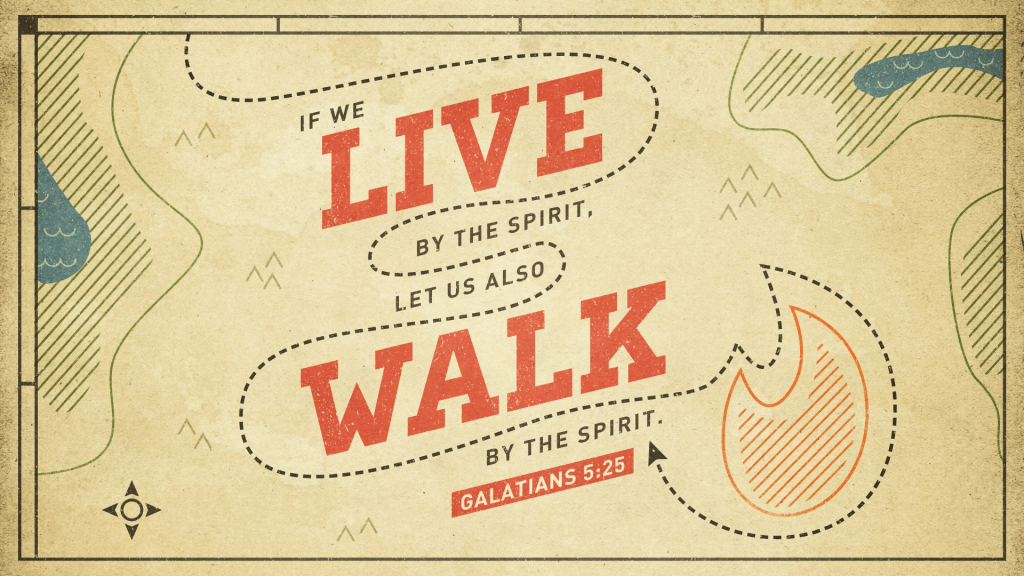
The relationship between the Holy Spirit and the Christian’s spiritual growth can be described through the following verse, “If we live by the Spirit, let us also walk by the Spirit,” (Gal. 5:25). The growth of the believer requires a change of heart and a renewal of the mind which is accomplished by the work of the Spirit. This means that the believer must be connected to Christ and depend on the power of the Spirit, which is to live by the Spirit and to walk by the Spirit. To live by the Spirit is to be dependent on Him for the ability to be gradually transformed more and more to the image of Christ, increasing in righteousness; “And we all, with unveiled face, beholding the glory of the Lord, are being transformed into the same image from one degree of glory to another. For this comes from the Lord who is the Spirit,” (2Cor, 3:18). Living by the Spirit and being dependent upon Him means to be under His control, which is necessary to have victory over sin and resistance against the power of temptation and the devil. Scripture is clear that our enemies are not only physical but are also spiritual. The Apostle Peter reminds us that Satan is like a roaring lion seeking to devour whoever he can, (1Pet. 5:8). We are in a constant battle against the world, the flesh, and the devil. Mankind without the power of God is weak against the temptations of the world and the flesh. He is also defenseless against the spiritual powers and principalities of the forces of darkness, (Eph. 6:12). This is why we must live by the Spirit and be dependent on Him as we work through our sanctification to resist and overcome our old sinful desires and grow toward righteous behavior through seeking the desires of the Spirit. Working through our sanctification is a reminder that we are not passive in our spiritual growth, but we have a responsibility in achieving it as K.S. Wuest quotes in his text.
“The responsibility of the saint is to desire to live a Christlike life, to depend upon the Holy Spirit for the power to live that life, and to step out on faith and live that life.”
Wuest, K. S. (1997). Wuest’s word studies from the Greek New Testament: for the English reader
To walk by the Spirit is to walk in accordance with the direction and leading of the Holy Spirit. The Spirit’s work is to direct us to the work of Christ in which we received redemption and His righteousness. This belief is the primary focus of the Christian life which keeps us Christ centered and subject to Him as Lord, King, and Savior. The Spirit fosters our relationship to Christ and is always directing us toward Him for our example of holiness and righteousness. In conjunction with this the Spirit guides us toward the truths of Scripture and illuminates our understanding which is necessary for our growth in knowledge. Growing in wisdom and knowledge leads us to maturity in the faith. Despite our maturity and growth, our battle with sin will continue as long as we inhabit these bodies of flesh, and therefore the Spirit convicts us when in our weakness we yield to temptation. However, He continually leads us toward Godly conduct and away from wickedness and the forces of evil.
As the Holy Spirit was sent by Christ to His followers at Pentecost as the comforter who empowered them to boldly preach the good news, so He is also our comforter to empower us to overcome the power of sin and the influence of demonic powers. In our regeneration He turned our hearts from inclining inward toward ourselves, to turning outward and upward toward God. With our hearts now orientated in the proper direction, we are able to pursue the desires of the Spirit instead of our own selfish desires of the flesh. We will now produce the fruit of the Spirit, which are good works that we do because of our love of God.

Walk by the Spirit and yield to His leading and your path to righteousness will be laid before you. Read, study and meditate on the Scriptures for the transformation of your mind. Pray to the Spirit and incline yourself to His indwelling presence as you move forward in your spiritual growth.
Mortification and Vivification
I have included the following paragraph because I found it necessary to address the erroneous teachings which are common in many of today’s churches which neglect the importance of spiritual growth and the seriousness of sin. It is important for believers to understand how serious unrepentant sin is in their lives because it will hinder the work of the Spirit toward their spiritual growth.
For the past several decades, maybe longer, the Church has departed from teaching the full council of God and has presented a lukewarm gospel for a society that is increasingly self-centered, arrogant, and rebellious. In this false gospel, the focus is on man and not on God. It is a feel-good, warm and fuzzy gospel promoting health, wealth, prosperity, and the notion that all persons are basically good with no need of a savior. In this view the Christian life is delightful and free from hardships and suffering. The Bible presents quite a different message. Christ taught His followers that they would have to deny themselves and take up their cross, (Mark 8:34). He also warned them that they would be hated, persecuted, and made outcasts for His sake. True discipleship brings trials, tribulations, and persecution. Spiritual growth during sanctification brings with it suffering through the inner battle against residual sin and the battle against temptation. For these reasons it is necessary to return to the original biblical teachings on the struggles of the Christian as he/she transitions from sinner to saint. The teachings of Christ and His apostles clearly teach the tribulations associated with following Him. Those who are true disciples of Christ are humble in spirit but bold in character. The pews of the mega-churches of the prosperity gospel and those featuring man-centered sermons are filled with self-righteous and pampered religious pagans who seek a god that will serve them instead submitting themselves to the God who they will serve. The true God of Scripture is a holy God who hates sin and requires repentance. His standards of conduct are high as exhibited by His Son, Christ, by His earthly ministry where He committed no sin. These standards are much too high to be achieved by the believer alone without the help of the Holy Spirit. Even then the path to righteousness is difficult because of the ongoing battle between the flesh and the Spirit, which is the reason that the mortification of sin and the vivification of the believer is necessary.
Let me add to this the words of J.D. Pentecost as he helps to explain the depth of our battle against sin and the need for the work of the Holy Spirit for our spiritual growth. It is also a reminder that the neglect of our spiritual lives will prevent growth toward spiritual maturity, leaving the babe in Christ to remain in spiritual diapers.
“The Word of God places impossibly high standards upon the conduct of the child of God. We are commanded to walk as He walked, to live as He lived, to love as He loved. As we read through the Word of God and perceive the requirements which God lays upon those who have named the Name of Christ; we realize that we cannot, of ourselves, attain unto the standards which God has put before us. The recognition of this fact may lead one to despair. He may adopt the attitude that, since the standards for the Christian life are so high and so unattainable by human methods and human strength, it is pointless to try. There are others who, because of the standards of the Word of God, will be driven to the Spirit of God to cast their dependence upon the sustaining strength and grace of the Holy Spirit so that He may live His life through us.”
Pentecost, J. D. (1997). The divine Comforter: the person and work of the Holy Spirit. Kregel Publications
Mortification in simplest terms is the putting to death of sin in the life of the believer; and vivification is the renewing of the person following mortification in becoming a new person in Christ. Another way to explain these concepts is that the battle against sin requires a defense and an offense. Mortification is the defense where the believer resists sin by striking at its root in the heart before it grows and becomes action. Vivification is the offense where the believer overcomes sinful desires and pursues righteousness by imitating Christ and being obedient to the commandments of God.
A popular example of the battle against sin is the great Jonathan Edwards who was one of the principal agents of America’s Great Awakening. In a biography written with passages from his personal diary, Edwards describes his struggles with sin. He realized that he lacked the strength to overcome his indwelling sin and that only through the power of God could he defeat his inner corruptions. A diary entry describes his belief that only the Holy Spirit can overcome and defeat sin; “Saturday evening, Jan. 5.… Sin is not enough mortified. Without the influences of the Spirit of God, the old serpent would begin to rouse himself from his frozen state, and would come to life again.” This quote and the one following is from S.J. Lawson’s biography of Edwards.
“Every believer who would pursue holiness engages in the fight against sin. Sanctification is an ongoing war with the world, the flesh, and the Devil to gain the high ground of godliness. It demands wholehearted commitment from every Christian soldier. Victory will never come if you do not wage war on the battlefield of your heart. Edwards fought as a tireless warrior in the fight against sin, and thus provides great inspiration for all who would follow his example.”
Lawson, S.J. The Unwavering Resolve of Johnathon Edwards. (pg. 89).
His example displays the struggle that all believers participate in their own spiritual battles. We all must take up our cross as we follow Christ. Even persons regarded as great and pious men of God like Jonathan Edwards engaged in the mortification of sin in their own progressive sanctification. They were Spirit-filled believers who continued in the teachings and in the path of the early church fathers—-they did not believe in a comfortable and privileged Christian lifestyle. They struggled and battled throughout their lives to be conformed to the image of Christ and to be faithful servants suffering through hostility and oppression.
Closing Thoughts
Spiritual growth is the path that the believer must take in order to rise to the standards of holiness and righteousness displayed by Christ. Our righteousness is not our own but is Christ’s given to us through faith. We must, however, strive to become Christlike in our conduct and actions, and only by Living and Walking by the Spirit is this possible. The Spirit indwells every believer and will direct them towards maturity in the faith. Many Christians have not received proper teaching, while many others have neglected their spiritual growth. Sanctification is not a passive endeavor—it demands the active participation of the believer. The power of sin is great, and the doctrine of sin has been rejected by this modern culture. Unfortunately, the struggle with sin is real. It requires mortification and vivification. Following Christ brings many blessings, but it also brings hardships. Christ suffered and died for our transgressions; to suffer for His sake should be considered an honor and a privilege. For to hear these words when we enter into our glory is a pleasure beyond measure, “Well done, good and faithful servant, enter into the joy of your master,” (Matt. 25:21).
Definitions
mortification-The process of “putting to death” one’s sinful nature (the old self), which continually struggles because of the reality of indwelling *sin. This process takes place in the lives of believers who, while they have been set free from sin’s dominion by the indwelling Holy Spirit who unites them to Christ, are called to live in light of God’s *grace as they actively work out their salvation.
(Kapic, K. M., & Vander Lugt, W. (2013). In Pocket Dictionary of the Reformed Tradition (p. 76). IVP Academic.)
vivification-Becoming a new person in Jesus Christ (Col. 3:9–10). In Protestant theology it has been seen, along with “mortification,” as one of the two parts of conversion, whereby a sinner turns toward God. Vivification follows mortification, putting sin to death, in the formation of a Christian person. Vivification is the quickening or coming alive to new life in Jesus Christ.
(McKim, D. K. (2014). The Westminster Dictionary of Theological Terms (Second Edition, Revised and Expanded, p. 340). Westminster John Knox Press.)
Recommended Resource

For those who wish a deep study of the Holy Spirit, I highly recommend The Divine Comforter by J. Dwight Pentecost. He presents a thorough teaching on the nature and work of the Spirit. The chapters of his book are divided in chronological order from the Old Testament teachings followed by the New Testament teachings on the Holy Spirit. He also includes three chapters dealing with the work of the Spirit and His relationship with the believer during his or her battle against sin and temptation.
Click on the below link for the resource
 Hosea 4:6 Teaching Ministry
Leave a comment