Introduction and Background
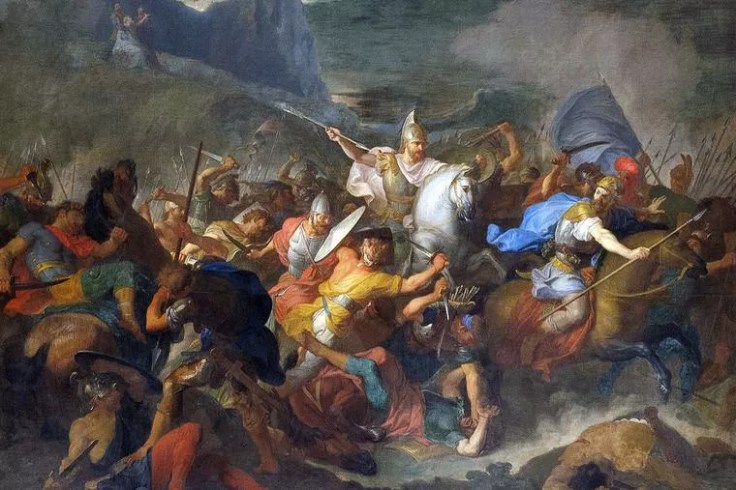
If the Book of Joshua was ever made into a big budget movie, and if it remained faithful to the Bible, it would be a spectacular hit. It would be classified as an action adventure and military drama. Joshua would be greatly admired as the charismatic hero who is a courageous and fearless warrior but is also of noble and righteous character. His greatest attribute was that he was loyal to God and devoted to defending God’s honor. Joshua is an example of a true and faithful servant of God for all to follow. His conduct and his story in connection to the conquests of the Canaanites as the Israelites are led by God is a biblical lesson on righteousness, dedication, and faithfulness. Joshua’s qualities are brought out in the various trials that he endures as leader of the Israelites and the commander of their army. While Joshua is the hero of the narrative, the true hero is God as He directs Joshua and the Israelites against a more powerful and greater enemy. The people enjoy victory when they are faithful, and experience defeat when they are disobedient. Joshua’s relationship with God is a key aspect of the nation’s success in the conquests as Joshua must balance his own leadership and military skills with God’s command and direction. Joshua does this by constantly consulting with God through prayer before each battle and when he needs direction. For the many that have not read the Book of Joshua, they will be captivated by many stories in the book such as the destruction of the walls of Jericho, the meeting between God as the Angel of the Lord and Joshua, the Sun and Moon stopping their movement during a battle, and the defeat of the race of giants known as the Anakim. These are the literary treasures found in the accounts of Joshua’s conquests.
Following the death of Moses, Joshua is appointed by God to succeed him as Israel’s leader. In the above verse, Joshua is given the commission to take possession of the Promised Land through the conquest of the Canaanites who occupy the land. Joshua is encouraged by God that He will support him in completing the mission. We must however go back further to the initial promise of the land of “milk and honey” made to Abraham. When God chose a people to separate from all the others as His own, He chose Abraham as their forefather from which all the Jews are descended from. Along with a chosen people, a chosen land is promised to them–That land is of course Israel. In the book of Genesis, God promises Abraham a great land for his people.
Now the LORD said to Abram, “Go forth from your country, And from your relatives And from your father’s house, To the land which I will show you;
And I will make you a great nation, And I will bless you, And make your name great; And so you shall be a blessing; (Gen. 12:1-2)
The Enemy Ahead
As Joshua plots his strategy to enter into the lands of the Canaanites, he analyzes the obstacles that lay ahead. The future nation of Israel is a land of several city-states that are ruled by kings and defended by fierce warriors. This is the battleground that lies ahead for Joshua and the Israelites. Jericho and the Canaanites would be the first enemy which would be engaged. Jericho was known for its great fortified walls which protected it from attacks. Many of the enemy groups were known for their brutality and cruelty such as the Amalekites, Midianites, and the Anakim. The Amalekites were especially despised because they did not live by working the land or raising livestock, they survived by raiding other groups and stealing their goods, destroying everything as they left, “So they would camp against them and destroy the produce of the earth as far as Gaza, and leave no sustenance in Israel as well as no sheep, ox, or donkey. For they would come up with their livestock and their tents, they would come in like locusts for number, both they and their camels were innumerable; and they came into the land to devastate it,” (Judges 6:3-15). They also were feared because they targeted the weak and the stragglers who passed through their territories, “Remember what Amalek did to you along the way when you came out from Egypt, how he met you along the way and attacked among you all the stragglers at your rear when you were faint and weary; and he did not fear God,” (Dt. 25:17-19). This is the nature of the enemy and the wicked character of the people that the Israelites would war against. The battles would be brutal, but justice can be seen being administered by God’s hand through the Israelites on cruel and merciless people.
Battle of Jericho
As Joshua and the army prepared to attack Jericho he was suddenly confronted by a mighty warrior with a sword in His hand. Joshua was at first puzzled at who this person was as he did not recognize Him as a Canaanite enemy. Joshua challenged Him by asking, “Are you for us or for our enemy?” The warrior responded by saying that He was for neither, He had come as the Commander of the Lord’s Army. The Lord then assures him that He has given him victory over Jericho and gives Joshua instructions for the battle.
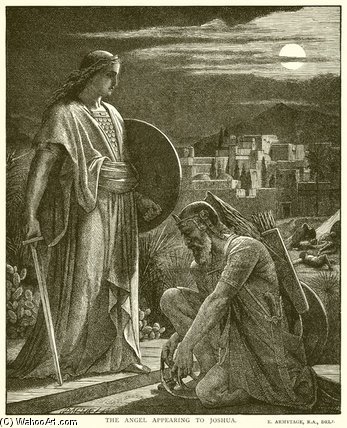
Joshua is confronted by the Commander of the Lord’s army.
“And it came to pass, when Joshua was by Jericho, that he lifted his eyes and looked, and behold, a Man stood opposite him with His sword drawn in His hand. And Joshua went to Him and said to Him, “Are You for us or for our adversaries?” So He said, “No, but as Commander of the army of the LORD I have now come.” And Joshua fell on his face to the earth and worshiped, and said to Him, “What does my Lord say to His servant?” (Joshua 5:13-14)
The battle for Jericho would not be easy because they possessed a powerful army and their fortress had been impenetrable. But they had the Lord’s promise, and the Canaanites were filled with fear after witnessing the miracle of the crossing at Jericho. The stage was set and Joshua prepared the people for battle. He gave the instructions to the priests and the army, and the battle began. On the first day they circled the city once with the priests carrying the ark of the covenant and blowing the trumpets. Joshua ordered that they were not to shout or say a word until He gave the command. They repeated this routine for a total of six days. On the seventh day before the march, Joshua warned the army that nothing is to be taken from the city for personal spoils of war, all items of value were to be placed in the treasury of the Lord. (This command would have severe consequences in the next battle). The army and the priests marched around the city seven times blowing the trumpets with the added shouts of the people, and the walls of the city fell down flat. The army attacked, destroying everything and everyone in the city except Rahab and her family who were spared from the destruction according to the vow given to her by the spies. The city was burned and the items of gold, silver, bronze, and iron were placed in the Lord’s treasury. Israel achieved its victory just as promised by the Commander of the Lord’s army, and the fame of Joshua spread throughout the land.
The Battle for Ai
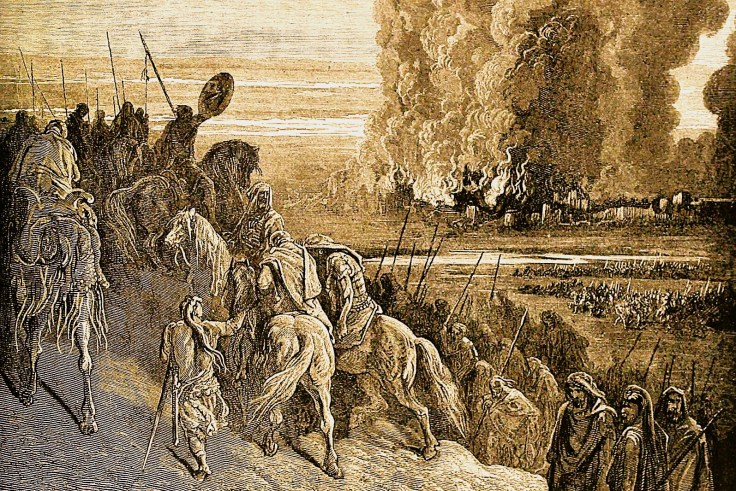
God instructed Joshua to set an ambush with a sizable force of five thousand at the rear of the city. Joshua and the main force approached the front part of the city. The king of Ai and his army saw the Israelites and went out to attack them. The king took his entire force out to engage the Israelites believing that they would have the same result that they had achieved a few days earlier, but unknown to him there was an ambush set behind them. As the army of Ai approached the Israelites, Joshua and his army turned and began retreating as if they had been beaten. When all of the soldiers of Ai were out of the city and no defenders were left in it, Joshua stopped and gave the signal to the ambushing force. They came out of their hiding place and entered the city, burning it in their assault. The army of Ai stopped and looked back when they saw that their city was on fire. The Israelites turned around and attacked the army of Ai from the front while the ambushing force came out of the city and attacked them from the rear. The army of Ai who thought that they were the pursuers were now caught in the middle of the ambush and trapped as they had no place of retreat. The Israelites cut them all down leaving none alive except for the king who was captured. Unfortunately, the king was taken to a nearby tree and hanged. As for the city of Ai, it was totally destroyed and burned to the ground making it uninhabitable. The details of the conquests may sound harsh according to our 21st century western sensibilities, but these were barbaric people who committed horrific acts of evil for which God is distributing His punishment. Remember God’s instruction to Moses regarding the possession of the “Promised Land,” “Only in the cities of these peoples that the LORD your God is giving you as an inheritance, you shall not leave alive anything that breathes. “But you shall utterly destroy them, the Hittite and the Amorite, the Canaanite and the Perizzite, the Hivite and the Jebusite, as the LORD your God has commanded you,” (Deut. 20:16-17).
The Battle at Gibeon
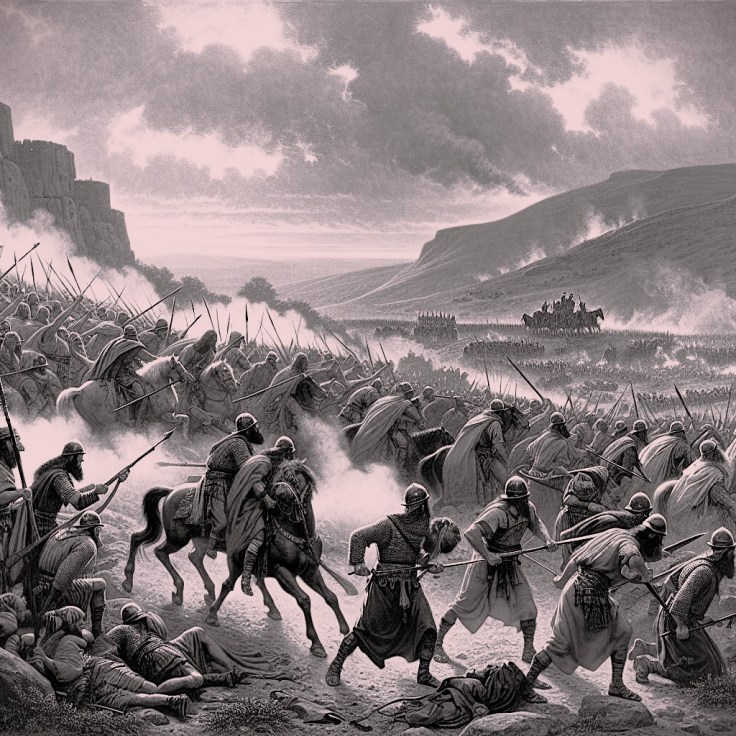
After the conquest and destruction of Jericho and Ai, Joshua and the Israelite army brought great fear on the kings of the cities that lay in their path. These kings considered their options, and a combined military partnership seemed to be the best response. Adoni-zedek, the king of Jerusalem, gathered four other kings to join him in a coalition to defend against the Israelites. Joining Adoni-zedek were, Hoham the king of Hebron, Piram the king of Jarmuth, Japhia the king of Lachish, and Debir the king of Eglon. This was the southern city coalition that combined their forces and went to war against Joshua and his army. The coalition forces camped near Gibeon and prepared for an attack. The Gibeonites quickly informed Joshua and requested help from the pending attack. Joshua was assured by God that He was with them in the coming battle and He had already given them into Joshua’s hands. Joshua gathered his army and they force marched all night to confront the Amorite kings. Joshua and his forces surprised the enemy by their night march and quickly turned the battle into a slaughter. As the coalition forces struggled to regroup, they retreated west toward Beth-horon but they were met with the intervention of God who dropped large hailstones on them from heaven. The hailstones inflicted more casualties than the Israelite weapons.
With the large army on the run, Joshua may have seen the opportunity to defeat the enemy in this battle without having to engage them again if they escape and regroup–So he prayed for the sun to stand still and the moon to stop. Most theologians believe that his intent was to cause the sun and the moon to remain fixed in their positions for the short length of time necessary to totally defeat the five-army coalition before nightfall. Never before or after was this miracle repeated, “There was no day like that before it or after it, when the LORD listened to the voice of a man; for the LORD fought for Israel,” (Josh. 10:13).
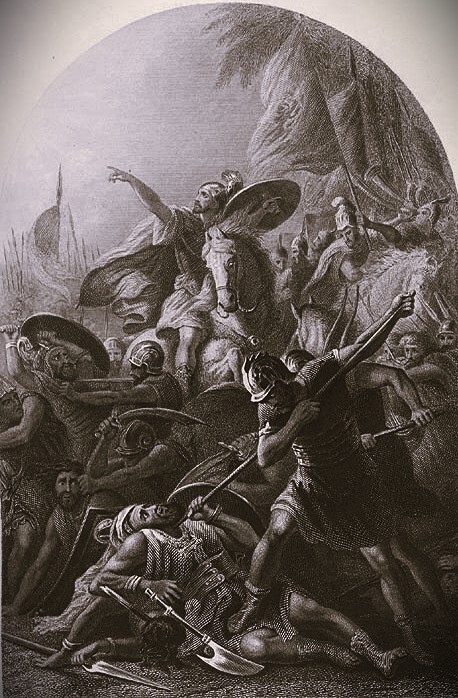
Joshua Orders the Sun and the Moon to Stand Still
“On the day the LORD gave the Israelites victory over the Amorites, Joshua prayed to the LORD in front of all the people of Israel. He said, “Let the sun stand still over Gibeon, and the moon over the valley of Aijalon.” So the sun stood still and the moon stayed in place until the nation of Israel had defeated its enemies. Is this event not recorded in The Book of Jashar? The sun stayed in the middle of the sky, and it did not set as on a normal day.” (Joshua 10:12-13)
The Northern Alliance
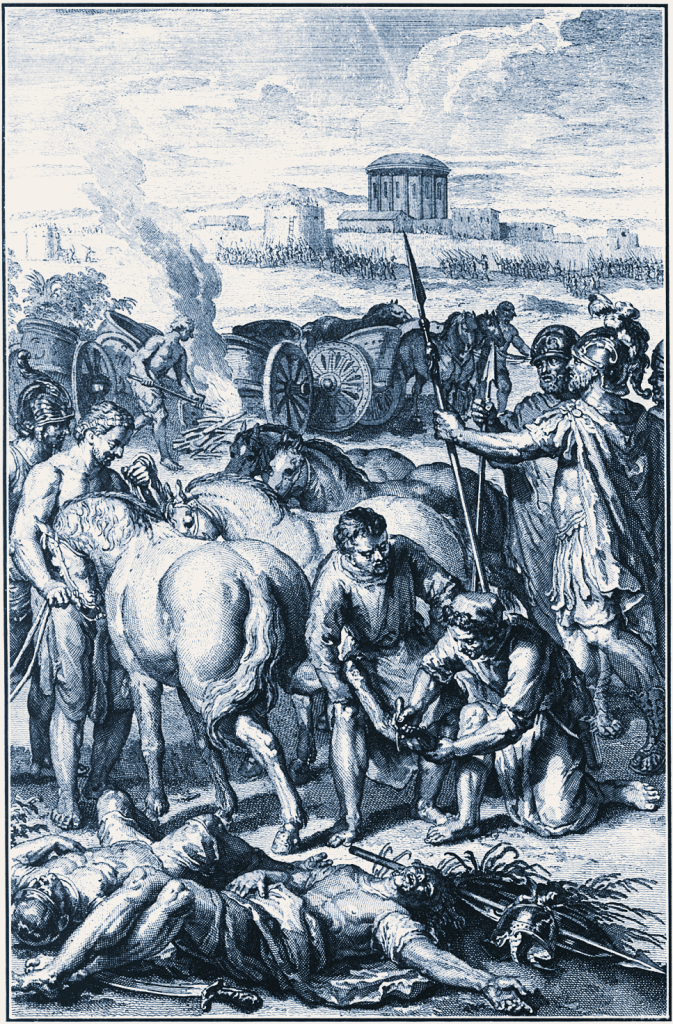
The Northern Alliance
After the Israelites had crushed the open resistance of southern Palestine, the cities of the north formed a league against them under Jabin, king of their head city of Hazor. These soldiers of the north fought in chariots, charging with their horses across the open plains; and hence the Israelites, accustomed only to fighting upon foot, held these new enemies in dread. God once more encouraged Joshua with assurance of His aid; and again Joshua arranged a sudden attack, rushing upon Jabin’s camp, while the horses and chariots were unready.
(Horne, Charles, and Julius Bewer. The Bible and Its Story: The History, Vol. 3.)
The great force of the northern alliance came together by the waters of Merom and camped there ready to engage the Israelite force. The Lord again encouraged Joshua with the promise of victory and with some instructions for the battle. He instructed Joshua to hamstring the enemies’ horses and to burn their chariots. Joshua brought his army to the enemy camp and swiftly attacked them with great force. The Israelites did as God commanded and disabled their horses and set their chariots on fire. The enemy scattered in various directions and were struck down as they fled. Joshua and the army pursued and destroyed them all as the Lord delivered them into their hands.
The Mighty Anakim
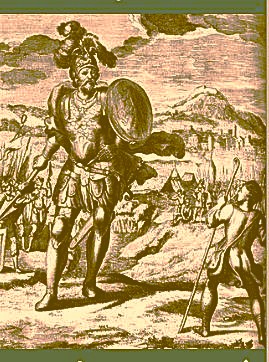
The Anakim were ancestors of a race of giants who lived in the coastal and hill country around Hebron. They are the descendants of Anak, said to be the greatest of these giants who were greatly feared for their great size and strength. The prophet Amos referred to them as “tall as cedars and strong as the oaks,” (Amos 2:9). Goliath is an example of the Anakim giants. These giants lived in areas throughout Canaan and were known by different names according to the different people groups of the region. They were known as the Rephaim in the territory of the Ammonites, who also called them Zamzummites. The giants who lived in Moab were called the Emmim. Another name associated with the Anakim is Nephillim. Among this group of giants were King Og of Bashan and Goliath the Philistine slain by King David. Both of these giants were estimated to be nine feet tall. The Anakim were eliminated and removed from the conquered areas by Joshua and Caleb during the conquests. The last conflicts in Joshua’s conquest are against the Anakim, who put such fear in the people when they first scouted the promised land that they rebelled against God. Now, under the leadership of Joshua and secure in the power of God, they attacked them with great courage. These remaining territories and their people were completely destroyed just as the others had been. The Anakim according to Joshua 11:22 no longer were in the land, but some remained only in Gaza, Gath, and Ashdod.
Five-Part Series
This post is a condensed version of the full series and only certain highlights are presented here. In order to keep with the purpose of condensing the bible stories and tailoring them for modern readers, the story of Joshua’s conquests has been divided into five parts. This ensures that each section is short, readable, and interesting for the reader. Each part contains the best and most relevant events of the conquest operation. This series is a shortened account of the conquests in the Book of Joshua, and it is hoped that the reader would turn to the Bible for the full account. Here is the full series.
- Part 1-Introduction and Background
- Part 2-The Central Campaign
- Part 3-The Southern Campaign
- Part 4-The Northern Campaign
- Part 5-Israel Divides the Land and the Battles Continue
For the full five-part series click on the link below:
 Hosea 4:6 Teaching Ministry
Leave a comment