Introduction
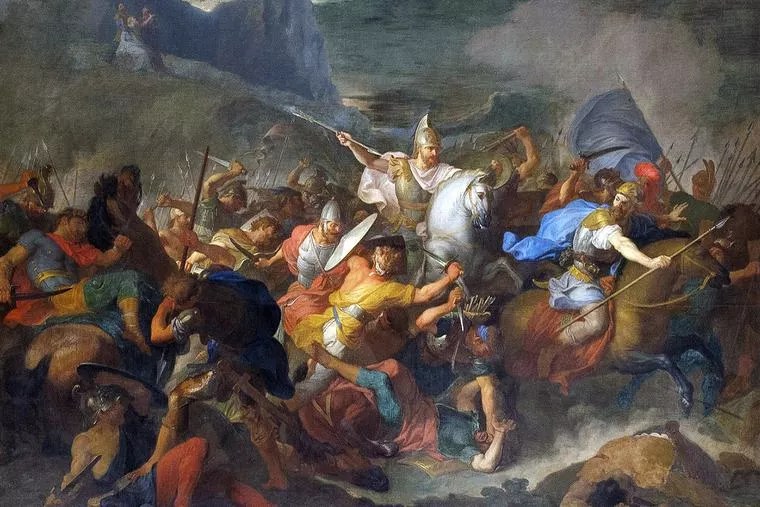
If the Book of Joshua was ever made into a big budget movie, and if it remained faithful to the Bible, it would be a spectacular hit. It would be classified as an action adventure and military drama. Joshua would be greatly admired as the charismatic hero who is a courageous and fearless warrior, but is also of noble and righteous character. His greatest attribute was that he was loyal to God and devoted to defending God’s honor. Joshua is an example of a true and faithful servant of God for all to follow. His conduct and his story in connection to the conquests of the Canaanites as the Israelites are led by God is a biblical lesson on righteousness, dedication, and faithfulness. Joshua’s qualities are brought out in the various trials that he endures as leader of the Israelites and the commander of their army. While Joshua is the hero of the narrative, the true hero is God as He directs Joshua and the Israelites against a more powerful and greater enemy. The people enjoy victory when they are faithful, and experience defeat when they are disobedient. Joshua’s relationship with God is a key aspect of the nation’s success in the conquests as Joshua must balance his own leadership and military skills with God’s command and direction. Joshua does this by constantly consulting with God through prayer before each battle and when he needs direction. For the many that have not read the Book of Joshua, they will be captivated by many stories in the book such as the destruction of the walls of Jericho, the meeting between God as the Angel of the Lord and Joshua, the Sun and Moon stopping their movement during a battle, and the defeat of the race of giants known as the Anakim. These are the literary treasures found in the accounts of Joshua’s conquests.
Background Information
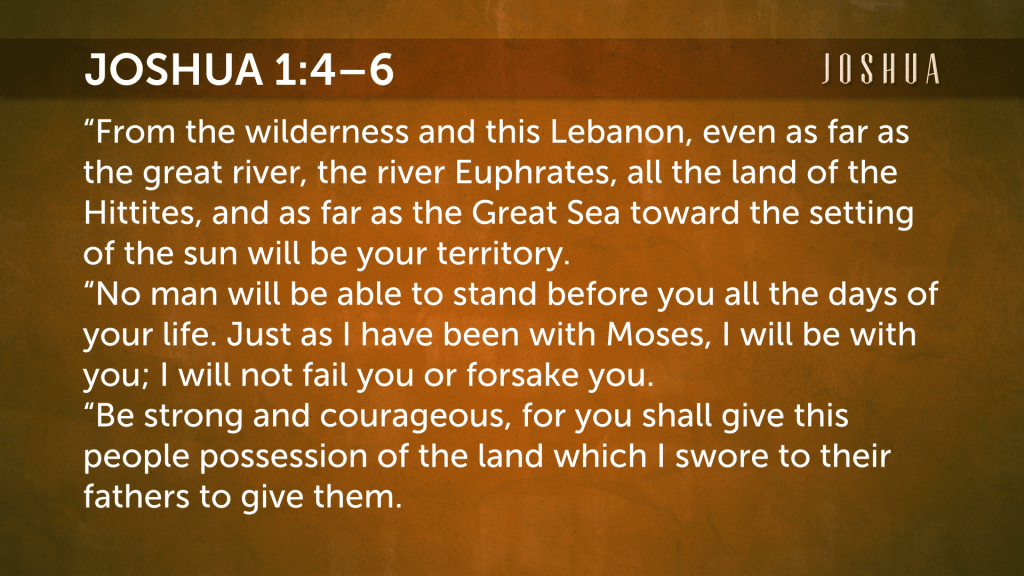
Following the death of Moses, Joshua is appointed by God to succeed him as Israel’s leader. In the above verse, Joshua is given the commission to take possession of the Promised Land through the conquest of the Canaanites who occupy the land. Joshua is encouraged by God that He will support him in completing the mission. We must however go back further to the initial promise of the land of “milk and honey” made to Abraham. When God chose a people to separate from all the others as His own, He chose Abraham as their forefather from which all the Jews are descended from. Along with a chosen people, a chosen land is promised to them–That land is of course Israel. In the book of Genesis, God promises Abraham a great land for his people.
Now the LORD said to Abram, “Go forth from your country, And from your relatives And from your father’s house, To the land which I will show you;
And I will make you a great nation, And I will bless you, And make your name great; And so you shall be a blessing; (Gen. 12:1-2)
God leads Abraham to the land which is a Canaanite region, and he lives there as a nomadic resident traveling throughout the land. His family would reside there for two more generations before famine would take them to Egypt where they would grow from the original 12 families to a great multitude after 400 years in the land. Because of their great numbers they became a threat to the Egyptians who then enslaved them. They prayed for deliverance, which came in the person of Moses. Moses, through the power of God, freed the people from Egypt and led them toward the Promised Land, which would become the nation of Israel. However, due to rebellion by the people against God and Moses, God punished them by making them wander in the wilderness for 40 years until that entire generation passed away, “None of the men who came up from Egypt, from twenty years old and upward, shall see the land which I swore to Abraham, to Isaac and to Jacob; for they did not follow Me fully, except Caleb the son of Jephunneh the Kenizzite and Joshua the son of Nun, for they have followed the LORD fully,” (Num. 32:11-12). This new generation are the people led by Moses and then commanded by Joshua who would conquer the Canaanites, and possess the land promised to them.
The Rebellion in the Wilderness
When the people led by Moses reached the border of the Promised Land they camped there, and Moses sent 12 spies to survey the land. Among the spies were Joshua and Caleb, two godly and loyal men. As the spies traveled through the land, they encountered the Anakim, (giants also known as the Nephilim, of whom Goliath is a descendant). They feared these giants and returned to the camp with a bad report. Their report frightened the people who protested against going into the land and they desired to return to Egypt. Only Joshua and Caleb gave a good report saying that there was no reason to fear the giants because God is with them. The crowd rebelled against God and Moses and became violent. Caleb and Joshua pleaded with the people to not rebel against God, and to not fear the Canaanites because God would lead and protect them. The people turned their anger toward Caleb and Joshua and threatened to stone them to death. If not for the intervention of God, they would have been killed. And because of their loyalty to God, Caleb and Joshua were not among those who perished in the wilderness and were allowed to enter the Promised Land.
“Joshua the son of Nun and Caleb the son of Jephunneh, of those who had spied out the land, tore their clothes; and they spoke to all the congregation of the sons of Israel, saying, “The land which we passed through to spy out is an exceedingly good land. “If the LORD is pleased with us, then He will bring us into this land and give it to us—a land which flows with milk and honey. “Only do not rebel against the LORD; and do not fear the people of the land, for they will be our prey. Their protection has been removed from them, and the LORD is with us; do not fear them.” But all the congregation said to stone them with stones. Then the glory of the LORD appeared in the tent of meeting to all the sons of Israel.“ (Num. 14:6-10)
Note
God’s punishment takes into consideration that this entire group of people had personally witnessed His great miracles against Pharoah in Egypt and again in the parting of the Red Sea. They should have remembered God’s power and promise to deliver them to the promised land. The demonstration of God’s power and commitment to them should have secured their faith, instead they rebelled against His authority and protection. Only Joshua and Caleb remained faithful and followed God fully.
The Conquests Begin with Moses
Moses and the Israelites traveled northward from the wilderness of Southern Israel into the lands of Edom and Moab, which is now modern-day Jordan. They were attacked by the inhabitants of these lands and engaged in the first battles of the conquests. They first defeated the King of Arad and its people and then defeated King Sihon and the Amorites. As they continued their march northwards they were met by King Og of Bashan and his warriors, who attacked them. The Israelites prevailed and conquered them including all of their cities. Finally, they warred against the Midianites and defeated their five kings. After this victory the Israelites took their cattle, livestock, and all their goods as spoils of war. They then camped in the plains of Moab by the Jordan river near Jericho. Here, Moses died on top of Mt. Nebo overlooking the Promised Land according to God’s judgment against him that he would not enter into it. Joshua was then appointed leader of the people and commander of the army. They then waited by the Jordan river for God’s directions regarding the conquest, which are given in the opening verses of the Book of Joshua presented above, (Joshua 1:4-6).
Joshua the Warrior and Servant of God
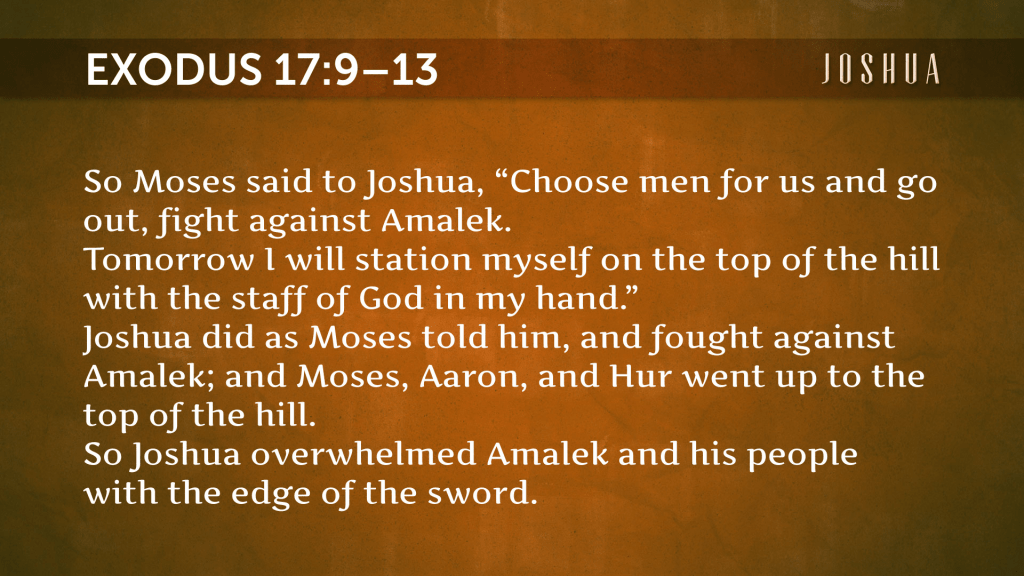
As stated earlier, the Book of Joshua clearly acknowledges God as the hero who leads His people to victory, but it also presents Joshua as a hero who possesses key qualities that make him a fearless warrior and a godly man who is passionate in serving God and defending His honor, as displayed in the rebellion in the wilderness. Joshua is an interesting and magnetic character that readers are immediately drawn to. They will ask, “Who is Joshua?” and “What else can we know about him?” We are first introduced to Joshua in the verse above, (17:9-13), where Joshua distinguished himself as a leader and great warrior in the battle against the Amalekites. Joshua’s outstanding character and zeal are quickly noticed, and he is chosen by Moses at an early age to be his assistant. Joshua was mentored by Moses and would be at his side in several key biblical events, such as when Moses climbed Mt. Sinai to receive the tablets with the Ten Commandments. He was joined by Aaron, Nadab, Abihu, Joshua, and the seventy elders, but only Joshua was allowed to accompany Moses to the top, (Ex. 24:12-14). Joshua’s commitment and loyalty are demonstrated at the “tent of meeting,” where he would remain as the guardian of this sacred space whenever Moses would leave the tent and return to camp, “Thus the LORD used to speak to Moses face to face, just as a man speaks to his friend. When Moses returned to the camp, his servant Joshua, the son of Nun, a young man, would not depart from the tent,” (Ex. 33:11).
Joshua, A Man with the Spirit of God

“So the LORD said to Moses, “Take Joshua the son of Nun, a man in whom is the Spirit, and lay your hand on him;” (Num. 27:18).
Scripture informs us that Joshua was a righteous man who possessed the Spirit of God. This is revealed by God as He instructed Moses to commission Joshua as the leader of the people who will govern after him. In His command to Moses, God reveals that Joshua is highly regarded because the Holy Spirit is in him. This is Joshua, the man of God who led the Israelites to the conquest of the Promised Land. His success depended on his faithfulness to God’s commands and the faithfulness of the people to remain loyal to God’s covenant with Moses. The stories of the conquests exhibit God’s relationship with Joshua and with the people. Faithfulness and loyalty to the Lord result in victory and protection, while rebellion brings defeat and abandonment. Joshua as God’s faithful and loyal servant is a teaching instrument for believers to understand in their own relationship with the Lord.
Five-Part Series
In order to keep with the purpose of condensing the Bible stories and tailoring them for modern readers, the story of Joshua’s conquests has been divided into five parts. This ensures that each section is short, readable, and interesting for the reader. Each part contains the best and most relevant events of the conquest operation. This series is a shortened account of the conquests in the Book of Joshua, and it is hoped that the reader would turn to the Bible for the full account. Here is the full series.
- Part 1- Introduction and Background
- Part 2- The Central Campaign
- Part 3- The Southern Campaign
- Part 4- The Northern Campaign
- Part 5- Israel Divides the Land and the Battles Continue
 Hosea 4:6 Teaching Ministry