The Southern Coalition
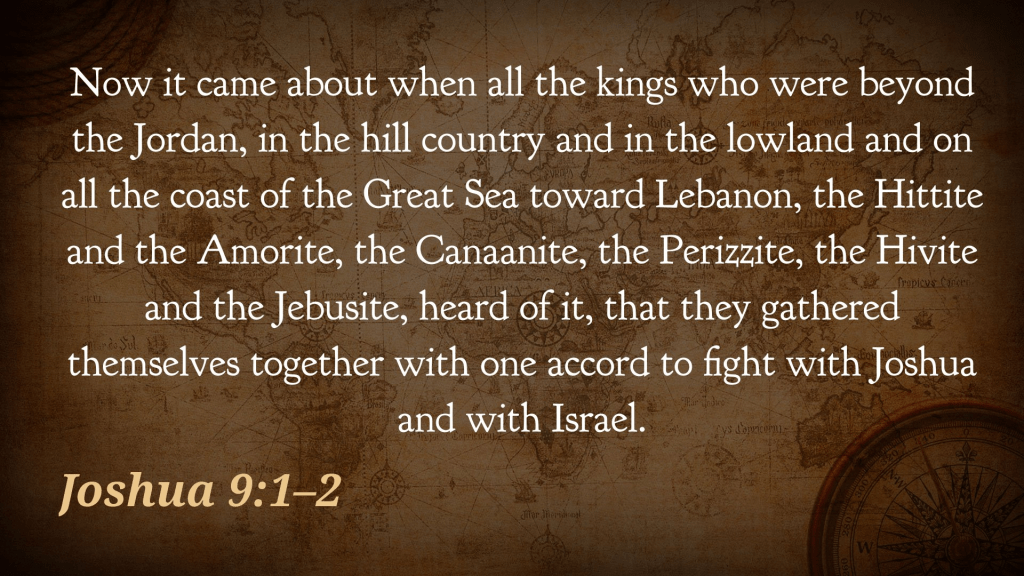
After the conquest and destruction of Jericho and Ai, Joshua and the Israelite army brought great fear on the kings of the cities that lay in their path. These kings considered their options, and a combined military partnership seemed to be the best response. There was a group with an opposing view–the Gibeonites. The people of Gibeon were the one group of the Canaanites that concluded that it was certain death to oppose Joshua and the Israelites because of the power of their God who fought for them. They knew and witnessed the Israelite policy of destroying and leaving no survivors of those that opposed their conquest of the land. They took a risk and formulated a plan of deception in order to surrender to the Israelites and become their servants. A group of them disguised themselves as people from a far-off nation and made an agreement with Israel that they would serve them in exchange for peace. The Israelites agreed and made an oath to not harm them. It was later discovered who they really were, but the Israelites were bound by their oath to exclude them from destruction. They were allowed to live but they would serve Israel for the rest of their days.
In contrast to the Gibeonites, the Amorite kings of the hill country opposed the God of the Israelites despite the displays of His power and His union with His people. They chose to rely on the power of their own pagan gods. Adoni-zedek, the king of Jerusalem, gathered four other kings to join him in a coalition to defend against the Israelites. Joining Adoni-zedek were, Hoham the king of Hebron, Piram the king of Jarmuth, Japhia the king of Lachish, and Debir the king of Eglon. This was the southern city coalition that combined their forces and went to war against Joshua and his army. Their first assault was against the Gibeonites who they targeted for betraying their fellow Amorites. The coalition forces camped near Gibeon and prepared for an attack. The Gibeonites quickly informed Joshua and requested help from the pending attack. Joshua was assured by God that He was with them in the coming battle and He had already given them into Joshua’s hands. Joshua gathered his army and they force marched all night to confront the Amorite kings.
The Battle at Gibeon
Joshua and his forces surprised the enemy by their night march and quickly turned the battle into a slaughter. As the coalition forces struggled to regroup, they retreated west toward Beth-horon but they were met with the intervention of God who dropped large hailstones on them from heaven. The hailstones inflicted more casualties than the Israelite weapons.
The Great Hailstones
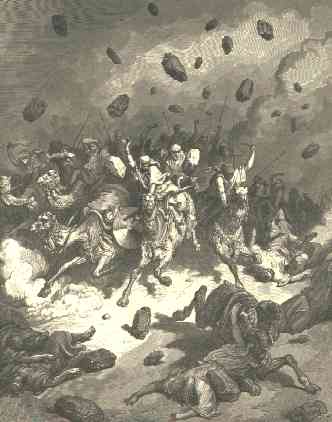
Hailstones from Heaven
“And it happened, as they fled before Israel and were on the descent of Beth Horon, that the LORD cast down large hailstones from heaven on them as far as Azekah, and they died. There were more who died from the hailstones than the children of Israel killed with the sword.” (Joshua 10:11)
The Sun and the Moon Stand Still
With the large army on the run, Joshua may have seen the opportunity to defeat the enemy in this battle without having to engage them again if they escape and regroup–So he prayed for the sun to stand still and the moon to stop. Most theologians believe that his intent was to cause the sun and the moon to remain fixed in their positions for the short length of time necessary to totally defeat the five-army coalition before nightfall. Never before or after was this miracle repeated, “There was no day like that before it or after it, when the LORD listened to the voice of a man; for the LORD fought for Israel,” (Josh. 10:13). The words from this phrase seem to indicate that these miracles were performed to display God’s power and His allegiance to Israel against the false gods of the pagan nations.
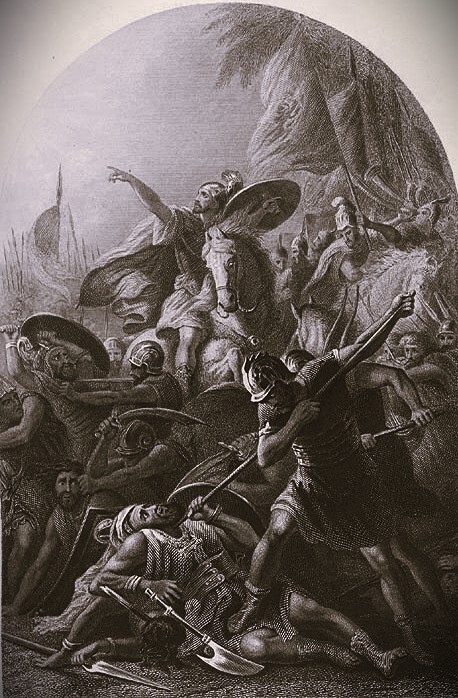
Joshua Orders the Sun and the Moon to Stand Still
“On the day the LORD gave the Israelites victory over the Amorites, Joshua prayed to the LORD in front of all the people of Israel. He said, “Let the sun stand still over Gibeon, and the moon over the valley of Aijalon.” So the sun stood still and the moon stayed in place until the nation of Israel had defeated its enemies. Is this event not recorded in The Book of Jashar? The sun stayed in the middle of the sky, and it did not set as on a normal day.” (Joshua 10:12-13)
The Concluding Battle
With Joshua and his army in hot pursuit, the coalition forces only chance of survival was to escape to Beth-horon, but they were caught and destroyed except for a few survivors who made it back to their cities.
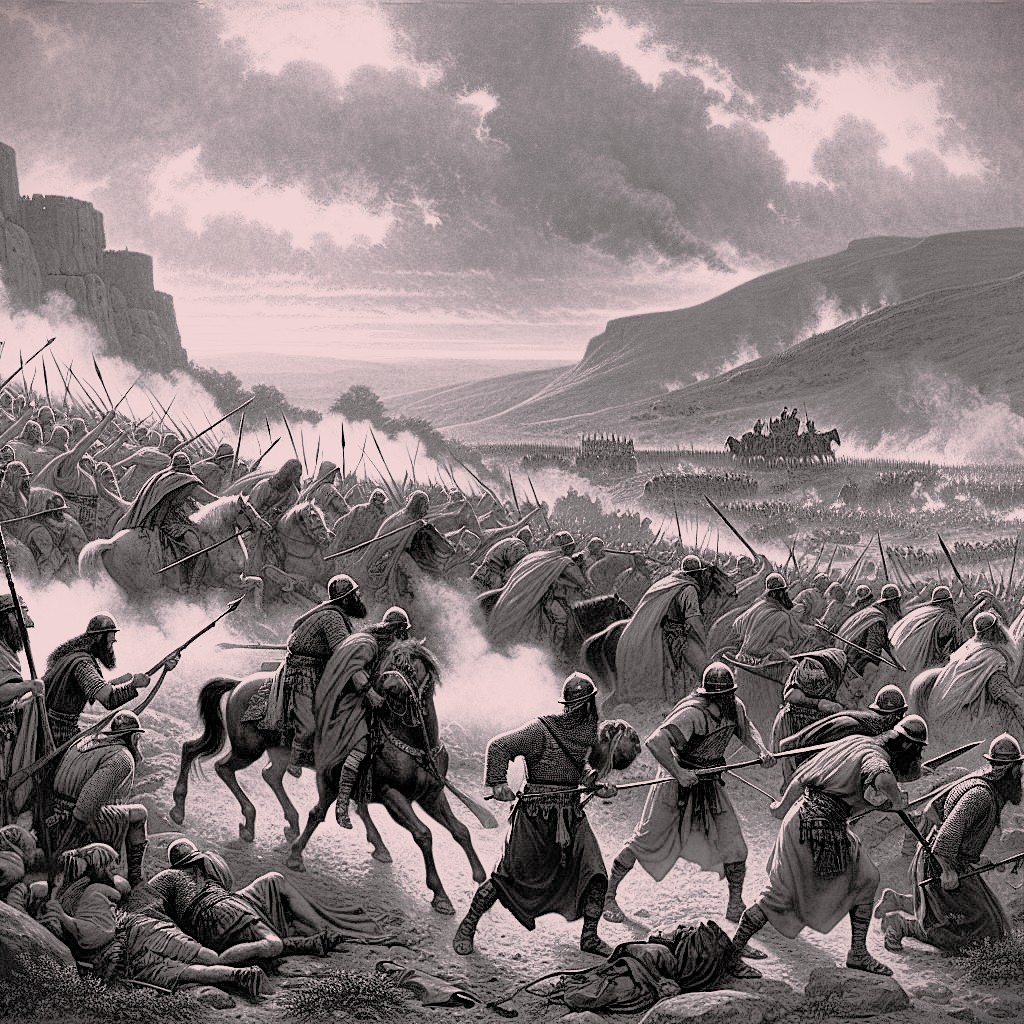
It was discovered sometime during the battle that the five Amorite kings had escaped and hid themselves in a cave at Makkedah. Joshua ordered the opening of the cave sealed with large stones until the battle was concluded. The army returned to the cave when the battle was secure, and they removed the kings from the cave. Joshua then struck and killed all five kings, and they were hung on trees until the evening and buried in the cave.
The Final Battles of the Southern Campaign
Following the victory over the five-king coalition, Joshua and his army marched southward as they conducted an invasion of six cities: Makkedah, Libnah, Lachish, Eglon, Hebron, and Debir. The full details of these battles are not known as Scripture gives very brief accounts. For each event we are told only that the Lord gave each city into the hands of Israel, and the city was captured by Joshua and the army who utterly destroyed every person in it. After this six-city operation, the Israelite forces continued the southern campaign until they had conquered all of the remaining cities of the hill country, the Negev, and the lowlands extending down to Kadesh-barnea. Joshua and all of the people returned to their camp at Gilgal where they prepared for the Northern Campaign.
 Hosea 4:6 Teaching Ministry