Summary of Joshua’s Campaigns
At the conclusion of the conquest campaigns the Israelites were in the land of “milk and honey” promised to them by God. Many of the former inhabitants had been killed or removed from the lands. Joshua had led the army of Israel through three major campaigns where they had conquered 31 Canaanite kings and their cities. The dreaded Anakim giants had been destroyed and expelled from their territory. The people who had been Egyptian slaves in the not-too-distant past now possessed their own land with good soil in which to farm and with abundant livestock taken as spoils of war from their enemies. The land was given to the people as their inheritance, and it was divided among the tribes of Israel by Joshua. God reminds Joshua that there are still several areas that remain to be possessed and He will continue to drive the remaining inhabitants out, but now it was time to give each tribe their allotment of land.
As Joshua was nearing his last days he called all the elders and leaders together to remind the people to never forget to honor their covenant with the Lord regarding the commandment to remain faithful to Him only and to avoid idolatry, “Now therefore, put away the foreign gods which are in your midst, and incline your hearts to the LORD, the God of Israel.” The people said to Joshua, “We will serve the LORD our God and we will obey His voice,” (Josh. 24: 23-25). The conquests of Joshua end on a positive note, as the war comes to an end and the tribes are given their inheritance, the people enjoy a season of peace, “Thus the land had rest from war,” (Josh. 11:23).
Lands Yet to Be Conquered
After the lands were divided, the responsibility of completing the conquests rested with each individual tribe. The map below shows the extent of land yet to be conquered. The people had witnessed the great work of the Commander of the Lord’s army in leading them in victory as they followed Him faithfully. They had also witnessed the leadership of Joshua as he constructed and followed a formula of consulting with the Lord prior to each battle and to faithfully follow His instructions and commands. It was now dependent upon each tribe to continue these traditions to achieve full possession and peace in their new home.
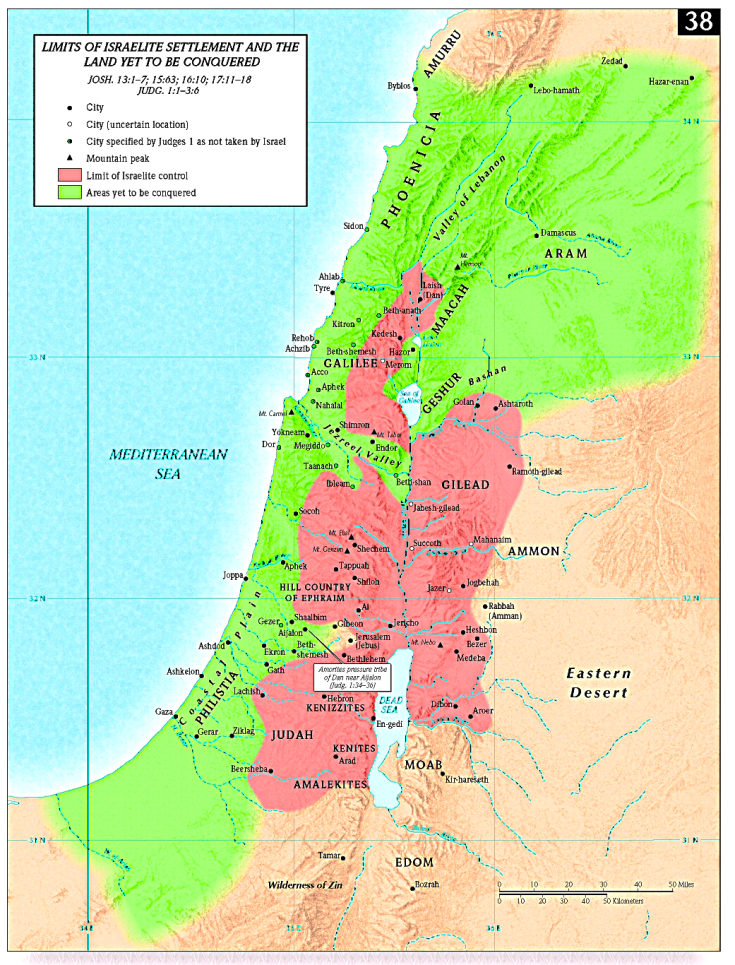
The People Abandon Their Faith
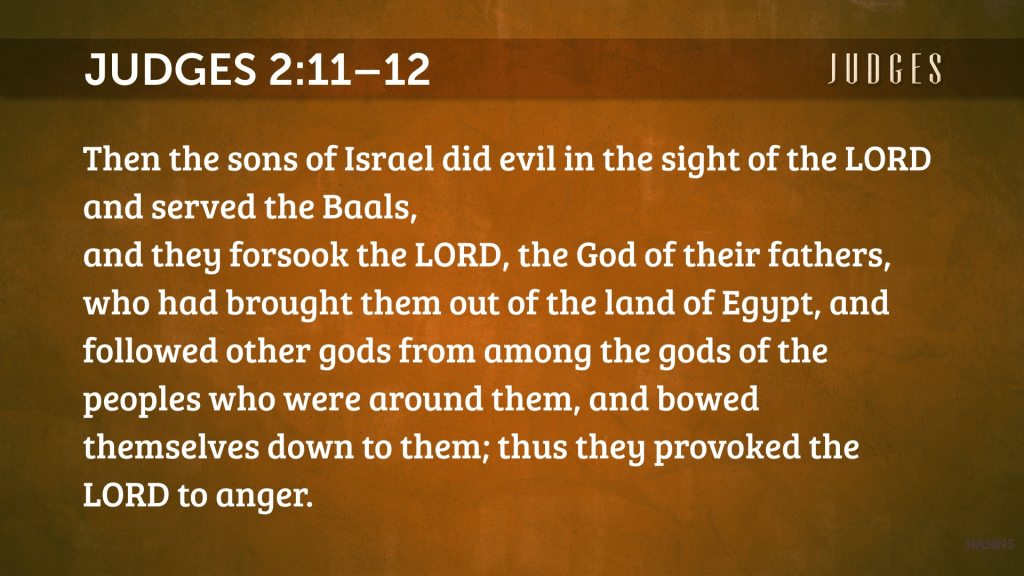
Following the death of Joshua and the elders, things started to deteriorate for the new nation. The verse above, (Judges 2:11-12), reveals the nature of the situation. We are then led to ask, “what happened to cause such a decline in the faithfulness of the people?” Joshua had warned them to remain faithful to the covenant and to God because as their leader he had learned that their hearts could easily be led astray. His warning was heeded by that current generation but forgotten and ignored by the next generation, “All that generation also were gathered to their fathers; and there arose another generation after them who did not know the LORD, nor yet the work which He had done for Israel,” (Judges 2:10). This new generation proceeded to worship idols and did evil in the presence of the Lord. The results quickly begin to present themselves as documented in the first chapter of Judges. Verse after verse records that the people were failing in their task to complete the conquests by driving their enemies out.
- But the sons of Benjamin did not drive out the Jebusites who lived in Jerusalem;
- But Manasseh did not take possession of Beth-shean and its villages, or Taanach and its villages,
- Ephraim did not drive out the Canaanites who were living in Gezer;
- Zebulun did not drive out the inhabitants of Kitron, or the inhabitants of Nahalol;
- Asher did not drive out the inhabitants of Acco, or the inhabitants of Sidon, or of Ahlab, or of Achzib, or of Helbah, or of Aphik, or of Rehob.
- Naphtali did not drive out the inhabitants of Beth-shemesh, or the inhabitants of Beth-anath,
- Then the Amorites forced the sons of Dan into the hill country, for they did not allow them to come down to the valley;
As this new generation of ungrateful and unfaithful people continued in their disobedience against God’s covenant and their persistent desire to worship the false idols of Baal and Ashtaroth, they were soon shaken to reality by a visit of the Commander of the Lord’s army as the Angel of the Lord.
Now the angel of the LORD came up from Gilgal to Bochim. And he said, “I brought you up out of Egypt and led you into the land which I have sworn to your fathers; and I said, ‘I will never break My covenant with you, and as for you, you shall make no covenant with the inhabitants of this land; you shall tear down their altars.’ But you have not obeyed Me; what is this you have done? “Therefore I also said, ‘I will not drive them out before you; but they will become as thorns in your sides and their gods will be a snare to you,” (Judges 2:1-3).
Future Battles
The statement from the Angel of the Lord to the disobedient Israelites would be the pattern that would shape the era of the Judges, this is the time from the death of Joshua to the reign of King David. The idolatry and disobedience described in the first few chapters of the book of Judges are only a shadow of what is to come in the next 400 years in the history of Israel. Idolatry will rise to new levels, immorality will be practiced unashamedly, and unfaithfulness to God will become commonplace, (pretty comparable to the state of our current world). Some of the events that occur in the book of Judges seem unimaginable to be found in the pages of Scripture–Be prepared to be shocked, as it is written in the book of Ecclesiastes, “There is nothing new under the sun,” (Eccles. 1:9).
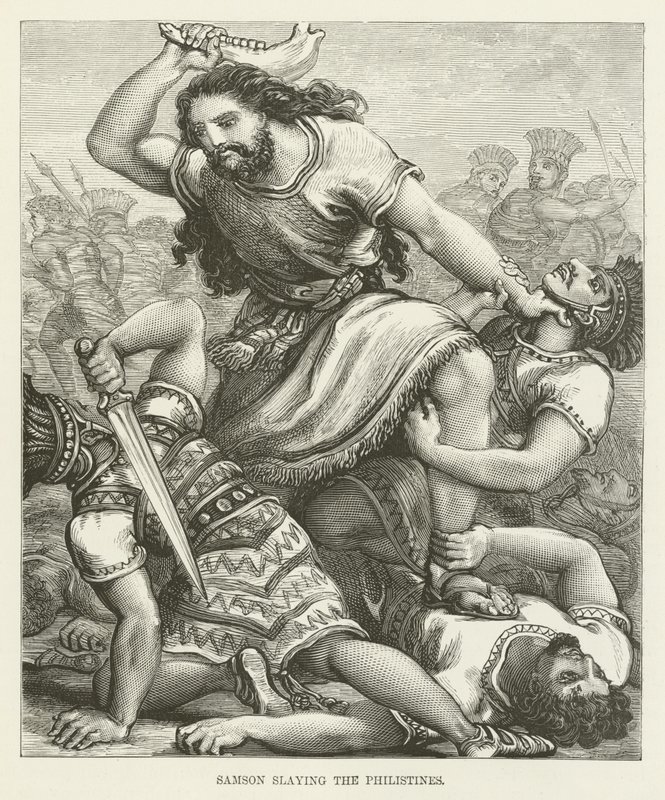
Because the people have abandoned God and continue to do evil in the sight of the Lord, God abandons them and will no longer drive out the remaining Canaanite tribes. The Israelites will be constantly at war with their neighbors and will often be taken captive or ruled by these enemies. The Philistines will be one their greatest foes who will constantly war against them. The allotment of land given to the unfortunate tribe of Dan bordered and even extended into Philistine territory. The Danites were even forced out of their land and into the hill country by the Philistines. They were so troublesome to the Danites that they found a new territory at the very north of Israel and they conquered the inhabitants of that city. They killed the people there, took their land, and made it their own. This is why there are two territories shown for the tribe of Dan on ancient maps. One of their kinsmen would be famously used by God to battle against the oppressive Philistines. This person was of course, Samson. He was one of many Judges used by God to bring relief to the suffering of the Israelites. Even though God had largely abandoned them, He was still faithful to His covenant to Abraham and at times responded to the prayers of the small remnant of the faithful in Israel. Other Judges included Gideon, Othniel, Deborah, Jephthah, and Ehud. These and others would lead Israel in the continuing battles against the remaining enemy groups.
Theological Notes
The conquests of Joshua are rich with theological significance that can be derived from the interactions between God and His people, and the display of God’s power as leads the Israelites to victory. The main theological message is God’s faithfulness in His covenant regarding the promised land. Faithfulness is a main theme in the interaction between God and Joshua individually, and between God and the people collectively. God remains faithful to Joshua as Joshua remains faithful to God’s commands, instructions and covenants. Joshua acknowledges God’s power, authority, and sovereignty as he submits to God and becomes dependent on God for success. The people are blessed when they are obedient to God’s commandments and follow Him faithfully. They are punished when they are disobedient, whether it is an individual or a group, they all suffer consequences. This is seen in the sin of Achan when he kept valuables taken from the city of Ai against the command of God. The people all experienced God’s judgment when they were defeated in their first battle against Ai. Achan received serious individual punishment when he and his family were stoned to death and burned. As Joshua’s campaigns progressed and the people won victory after victory, and they witnessed the great miracles of God in defeating their enemies, the theological message is apparent–God is faithful to His people as they remain faithful to Him. The book of Joshua is a theological contrast to the book of Judges; God’s faithful people receive blessings in Joshua, while disobedient people fail to receive blessings in Judges.
The story of Rahab during the central campaign is a theological message of faith, mercy, and loyalty. Rahab recognized God as the one true God, and she risked her life as she proclaimed faith in Him. She was spared from destruction by God’s mercy, and she remained loyal to Israel’s God for the remainder of her life. She is highly regarded in Scripture as a model of true faith and is a testament to God’s forgiveness and love that He offers to the poor, sick, weak, old, and the outcasts of the world.
Tribute to Joshua
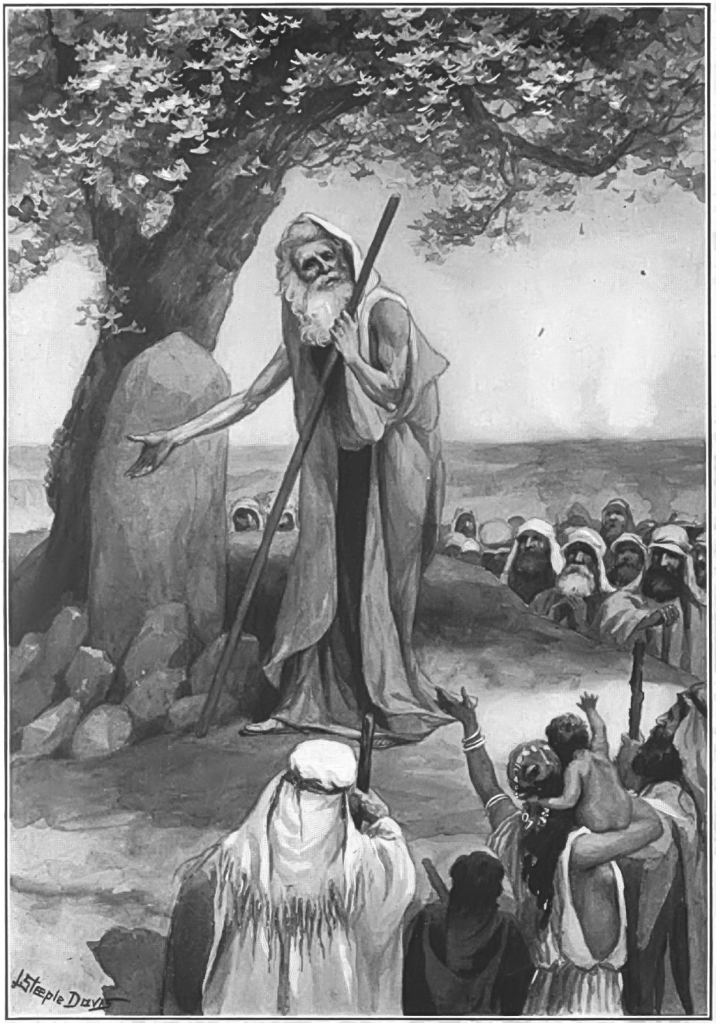
Israel served the LORD all the days of Joshua and all the days of the elders who survived Joshua, and had known all the deeds of the LORD which He had done for Israel. (Joshua 24:31)
There are many heroes in the pages of Scripture and many villains. Heroes are to be imitated while villains are to be condemned. God’s revelation presents certain righteous people as examples of doing what is good and right in God’s eyes. Certain heroes possess degrees of righteousness that surpass the righteousness of others, Joshua is one of these persons. Many of the biblical heroes had times of moral failure and spiritual weakness. Joshua is one of only a few who has no such failures or transgressions recorded in Scripture. He was an imperfect man as every other fallen human is, but what is recorded about him is indeed exceptional. Throughout his life he is described as courageous, faithful, and passionate in his devotion to God. As the verse above states, “Israel served the Lord all the days of Joshua.” Joshua was dedicated to serving God by keeping His holy rituals and constantly reminding the people to follow God faithfully, and not to seek after other pagan gods. Despite all of his successes and victories, Joshua never proclaimed glory for himself but always directed it toward the Lord. Israel had a history of constantly engaging in evil and idolatry, but during the time of Joshua’s leadership the people were obedient. The combination of Joshua’s attributes listed above and God’s faithfulness to His covenant provided for this obedience. Joshua was a righteous and noble man that displayed the proper attitude and relationship with the Lord that we should strive to imitate.
It was evident that the Spirit of God rested strongly on Joshua, because what other man was able to call on God and have the sun remain still and the moon stop in its orbit? As the scriptures reveal, “There was no day like that before or after it, when the Lord listened to the voice of a man,” (Josh. 10:14).
 Hosea 4:6 Teaching Ministry