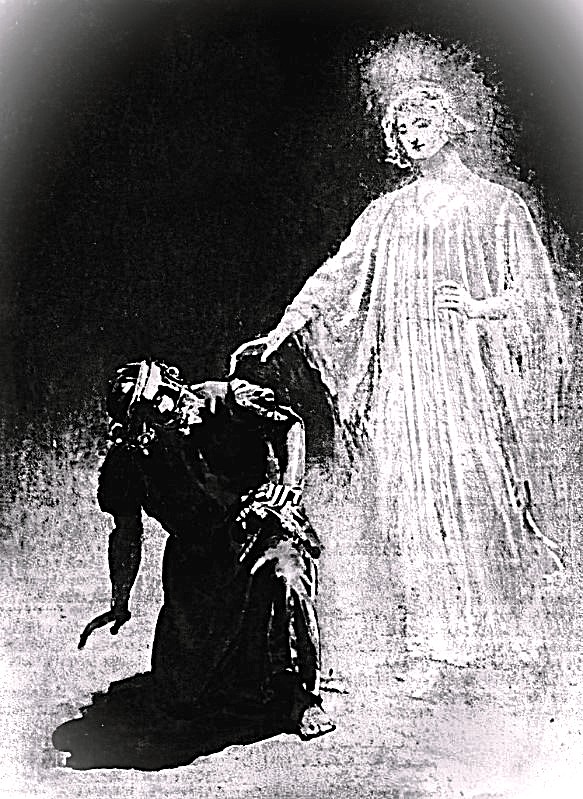
And behold, a hand touched me and set me trembling on my hands and knees. And he said to me, “O Daniel, man greatly loved, understand the words that I speak to you, and stand upright, for now I have been sent to you.” And when he had spoken this word to me, I stood up trembling. Then he said to me, “Fear not, Daniel, for from the first day that you set your heart to understand and humbled yourself before your God, your words have been heard, and I have come because of your words, (Dan. 10:10-12)
Daniel the Prophet
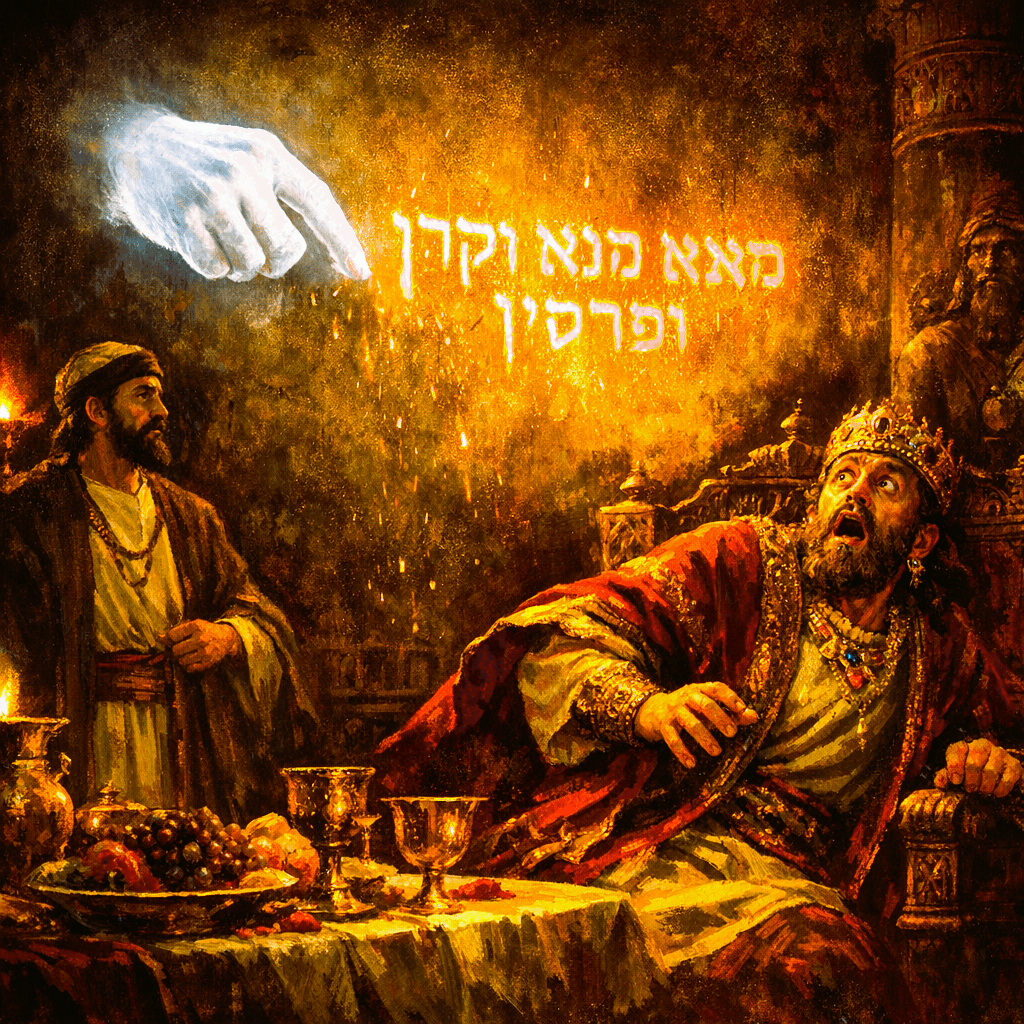
The Handwriting on the Wall
Suddenly the fingers of a man’s hand emerged and began writing opposite the lampstand on the plaster of the wall of the king’s palace, and the king saw the back of the hand that did the writing. Then the king’s face grew pale and his thoughts alarmed him, and his hip joints went slack and his knees began knocking together.
(Dan. 5:5-6)
Daniel is most remembered from the Bible story–“Daniel in the Lions Cage.” For those not familiar with the story it describes Daniel’s ordeal as he is cast into a den of lions. A group of evil men in the king’s court were jealous of Daniel because he was appointed to a high position over them, so they created a plot against him. They knew his only weakness was his devotion to his God, so they had the king sign a law that forbade prayer to anyone except to the king for thirty days. When Daniel was found in prayer to his God he was arrested and sentenced to death in the lion’s den. He spent the night in the den and when they checked on him the next morning, he was still alive. When he was asked how he survived, he reported that God had sent an angel that bound the mouths of the lions. After the king learned that the men that had him draft this law did so only to conspire against Daniel, he had them thrown into the lion’s den where they were mauled to death. Another interesting story is the one about the “Handwriting on the Wall.” King Belshazzar was hosting a banquet in his palace when he decided to use the golden cups that had been taken from the Jerusalem temple so that he could praise his pagan idols. These cups were sacred vessels used in God’s temple worship and this action by Belshazzar was an act of desecration of holy instruments. A mysterious floating hand suddenly appeared and wrote a strange message on the wall that could only be interpreted by Daniel. It was a message of judgment against Belshazzar indicating that his kingdom would be taken away from him and given over to the Medes and Persians. That night King Belshazzar was murdered by Darius the Mede who became the ruler of the kingdom.
Daniel’s world was shaped by the conquest of Jerusalem and the destruction of the temple by the Babylonians in 586 BC. The northern kingdom of Israel was conquered in 722 BC by the Assyrians and the southern kingdom of Judah escaped judgment until 586. Many of the people were taken into captivity by the Babylonians, and in the case of Daniel, the Israelites of royal heritage and nobility were chosen to be servants in the king’s palace. Young men, teenage boys, who were intelligent, possessed good looks, and who displayed good judgment were placed into a training program so that they could serve in the royal court. Daniel and three of his friends were among those who were chosen for this task. These captives received favorable treatment, and they lived in the palace in close proximately to the king, which would serve Daniel in his mission to provide God’s prophecy to the king. They all were given special knowledge and skills by God, and Daniel was specially gifted with the ability to understand dreams and visions, “As for these four young men, God gave them knowledge and skill in all literature and wisdom; and Daniel had understanding in all visions and dreams,” (Dan. 1:17). Daniel’s abilities and story are very much like Joseph’s, the son of Jacob, who was sold into slavery by his brothers and rose to the level of prime minister in Egypt through his prophetic gifts.
The prophets Jeremiah, Daniel, Ezekiel, and Zechariah were called to prophesize during this time. Jeremiah prophesized first, and he ministered in Jerusalem before and during the conquest. He was not taken in the captivity. Those Israelites that were taken, were exiled in three stages. Daniel was taken in the first stage, and Ezekiel was taken in the second. As described above, Daniel was taken to Babylon where he ministered to those exiles who lived in the king’s palace. Ezekiel was taken to a town sixty miles southeast of Babylon and his ministry was to those exiles who were placed there. Zechariah was the last of these four prophets and he was born during captivity in Babylon where he ministered to those exiles. He was also among the captives that returned to Jerusalem to rebuild, and his ministry extended to that time. These prophets were given prophecies concerning the judgment coming on the Israelites for their idolatry, and to encourage the exiles concerning future restoration and blessings.
The prophecies of Daniel concerning future events are complex and they require a deep analysis. Some of his prophecies concern the coming of Christ, and the end-times. His seventy-weeks prophecy predicts that there would be seventy periods of seven years until the coming of the Anointed One, “Know and understand this: From the issuing of the decree to restore and rebuild Jerusalem until an Anointed One, the ruler, will be seven weeks and sixty-two weeks. It will be rebuilt with a plaza and a moat, but in difficult times,” (Dan. 9:25). This prophecy with its timeline is difficult to understand and interpret. The theories, debates, and speculation concerning this prophecy are numerous and unending. Many have used this formula to predict the time of the end of history and were proven wrong. This displays the complexity of the prophecies of Daniel and the need for a deep study of each individual one. This study is focused on Daniel as a model of righteousness and piety for believers to follow in their own lives of spiritual growth. Daniel’s vision of the Ancient of Days and the One Like the Son of Man is presented as an example of the glorious vision of the heavenly realm which was given to only a few of the prophets.
Why Was Daniel So Greatly Loved By God?
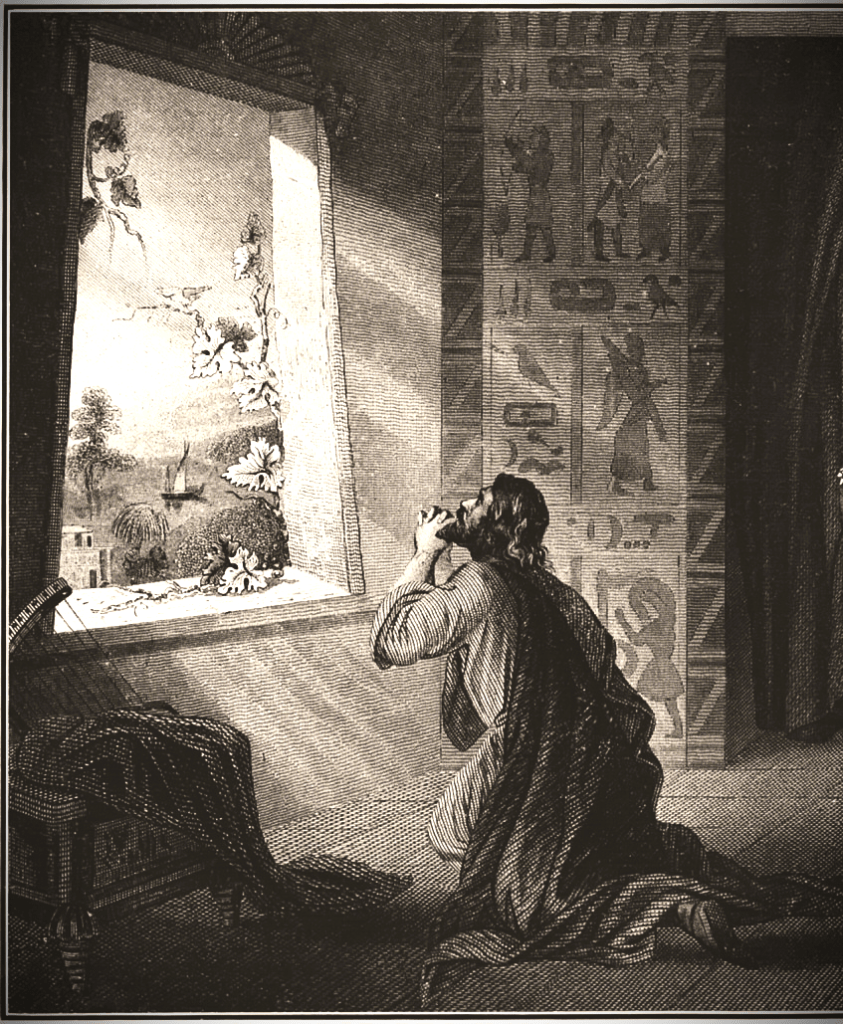
In a study of the Book of Daniel there was one detail that really caught my attention and caused me to have a much greater admiration for Daniel. Daniel is addressed several times by the angel Gabriel with the title of “man greatly beloved,” or “man greatly loved.” In the following passage he is told that he is greatly loved, “At the beginning of your pleas for mercy a word went out, and I have come to tell it to you, for you are greatly loved,” (Dan. 9:23). A check of the most popular bible translations concerning this verse reveals that three other terms are used to describe how Daniel is greatly loved: “you are treasured by God,” “you are highly esteemed,” and “you are precious.” The weight of this greeting to Daniel is on the person from whose mouth these words come from. The angel Gabriel is God’s premier angel, and he has been sent directly by God to present this message to Daniel. Therefore, the person who greatly loves Daniel, who treasures him, and considers him as precious, is God Himself. Let that sink in for a minute! To put this in proper perspective we must consider how many other persons in scripture are addressed in similar fashion–not many! My initial impression was that there can no greater compliment than to hear that God loves me greatly and highly favors me. From the lips of God’s angelic messenger to your ears, you are told, “you are treasured by God.” I believe that every Christian would love nothing more than to hear these words in their lifetime. The only thing that could compare would be to hear these words as you enter into God’s eternal kingdom, “Well done, good and faithful servant. Enter into the joy of your Lord,” (Matt. 25:23).
As I contemplated these words addressed to Daniel, I felt a great amount of envy because I wanted to be like Daniel and be told that God loves me greatly. While that bar may be set too high and out of reach for the believer, such as I, who is working through his sanctification process with much gnashing of teeth as he battles the world, the flesh, and the devil. Regardless, I mined the book of Daniel to discover what set him apart from regular fallen humanity and made him special in the eyes of God. The following is the result of my research presented for my readers. As I mentioned before, the bar set by Daniel is high because he was a person of exceptional integrity, faith, and obedience, but we can strive to do our best to imitate his character.
Daniel’s Exceptional Qualities
- Piety- Piety can best be described as a commitment to holy living, doing what is right in God’s eyes, and being devoted to a life of purity. Throughout Daniel’s life this piety makes him admired by his friends and fellow Jews, but it creates conflicts with the religious beliefs of his captors and brought a death sentence against him. He was sentenced to death in the lion’s den for praying to his God when there was a decree against it. Daniel’s commitment to doing what was right in God’s eyes overruled his fear of death displaying the level of his piety.
- Perseverance- Many of the religious heroes of Scripture experienced times of weak faith and times of strong faith. Times when they yielded to temptation and became backslidden. Some of these people started strong and ended badly, or started badly and ended strong, like the Apostle Paul. Daniel’s life is a straight line of steadfastness for a life devoted to holiness. He started well and ended well, with no falls recorded during his lifetime.
- Honorable- Daniel’s piety and integrity was recognized by all those who knew him. His character was so elevated that he was a person known to be honorable, and whose conduct was above reproach. He was placed in the highest levels of the kingdom by two separate kings because of the trust that his conduct had merited.
- Obedient- Rebellion is the distinct opposite of obedience. Daniel lived his life in obedience to his God, his faith, and even to the administration of an opposing kingdom. His piety inspired his desire to obey the commandments of God, and to be obedient to the instructions of those appointed over him because he recognized God’s design in placing him in that position. He obeyed and served the commands of his captors with distinction knowing that his conduct brought glory to God.
- Faithful- Daniel remained faithful to God throughout his ordeal regardless of the hardships that had to endure at times. He never questioned or doubted God. He trusted God in all things and followed the teachings of his faith until his last days. His faith was often tested but regardless of the outcome, his strong faith influenced his belief that God was in control and doing what was according to His will.
- Prayerfulness- In relation to Daniel’s faith was his devotion to prayer. He prayed and sought God for wisdom as he encountered difficulties in his life of captivity. He prayed for himself, for his captors, and for his people. In his prayers, he gave thanks, confessed sin, sought forgiveness, and praised God. Daniel’s prayers are much like King David’s which are contained in the Psalms. Their prayers reveal much concerning their close relationship to God. God loved David greatly and David constantly confessed his love for God. Daniel was told several times that he was greatly loved and favored by God. These expressions of God’s affection for Daniel come soon after he gave a great prayer in chapter 9 for his people due to their great acts of rebellion and disobedience against God. To place this act in proper context; the great sins of the people by their idolatry and breaking of the covenant help us to understand how Daniel’s contrite heart is greatly treasured when measured against the unrepentant hearts of the majority who acted wickedly. Though he remained obedient and faithful, he still felt the great offense against the God that he loved, so he humbled himself and intervened on behalf of his people by seeking repentance and forgiveness. This is why he is told by the angel soon after he began his prayer that God has responded with an answer because he is greatly loved. Then later in verse, (Dan. 10:11-12), he is again told that he is a man greatly beloved and that God had responded to his words because Daniel had set his heart on understanding and humbling himself before God. Daniel’s prayers were exceptional because he humbled himself, repented for his own sins and the sins of others as he considered the harm that they caused the great and holy God. His mind was set to do what was right in God’s eyes.
- Kind-hearted- Daniel had a gentle and loving nature which made people grow fond of him. Those who were appointed to supervise and train Daniel treated him favorably. He was gracious to those over him, and he approached everyone with the proper respect, never showing malice to any. He showed no hostility toward anyone and when he achieved a high level in the king’s court, he never displayed an attitude of arrogance over those that served him.
- Compassion- Daniel’s prayer for his people reveals his compassion for them. He presents the disobedience of the people by their wickedness and rebellion. His prayer includes the many accounts of their unfaithfulness which was the cause for the calamity that God brought down on them. In spite of the people’s sinful actions, Daniel expressed compassion toward them and pleaded to God for their forgiveness. He prayed that the Lord would turn His anger and wrath from them, not because they deserve anything, but because of God’s great compassion.
- God-centered- The entirety of Daniel’s life was centered on God. He loved God, obeyed God, praised God, and sought God through constant prayer as a son seeking comfort, wisdom, and relationship with his father. He was taken at an early age from his family by an army of strangers to a hostile land. He was without his beloved family and father, so he sought comfort from his divine Father. God was the Father that protected, guided, and instructed Daniel in wisdom. Daniel recognized this, therefore his Father, his God, was the center and focus of his life. While Daniel’s peers were focused on keeping the law for righteousness, Daniel was focused on his relationship with God for righteousness and every other aspect of life. Daniel is an example of what that relationship with God means–being God-centered and making Him the focus of our lives with everything else taking its position around God at the center.
Greatly beloved by God? Yes, he was! Daniel possessed these virtues that set him apart from others and made him precious in the eyes of God. But it was more than that–Daniel was in a special relationship with God, as Father and son. God led, and he followed. He humbled himself and set his heart on understanding God’s word and will for his life. He turned to God and sought after Him through prayer, “So I turned my attention to the Lord God to seek him by prayer and petitions, with fasting, sackcloth, and ashes,” (Dan. 9:3). There is another biblical hero who had the same type of relationship with God, who related to Him as a son to his Father, and who spoke to God constantly through prayer. King David’s relationship with God and his conversations have been preserved in those Psalms which he authored. His words reveal why God referred to David as, “A man after my own heart,” “The LORD has sought out for Himself a man after His own heart, and the LORD has appointed him as ruler over His people,” (1Sam. 13:14). David and Daniel knew God personally and this relationship was the foundation that shaped their lives. David was a warrior and a rugged man of unbridled passions which caused him to stumble, but his great faith and true repentance brought him back in God’s grace. Daniel was a man with a gentle spirit and of high integrity who served God faithfully for his entire life and did not stumble. These men followed different paths and had different personalities, but they both loved God and placed Him as the main priority in their lives. In Daniel, we see a life of true piety and purity. In David, we see a life filled with struggle against worldly desires, but we also see a man of great devotion and faith to His Lord where he maintained this relationship through deep confession and repentance. Believers can identify with one of these men as they desire to be either, “a man or woman after God’s own heart,” or as a person “greatly beloved by God.” The heart of the matter is that we were made in the image of God so that we could be in relationship to Him–Love, honor, and cling to the Lord who has adopted you by faith just as a child clings to their father.
The “Ancient of Days” and the “One Like The Son Of Man”
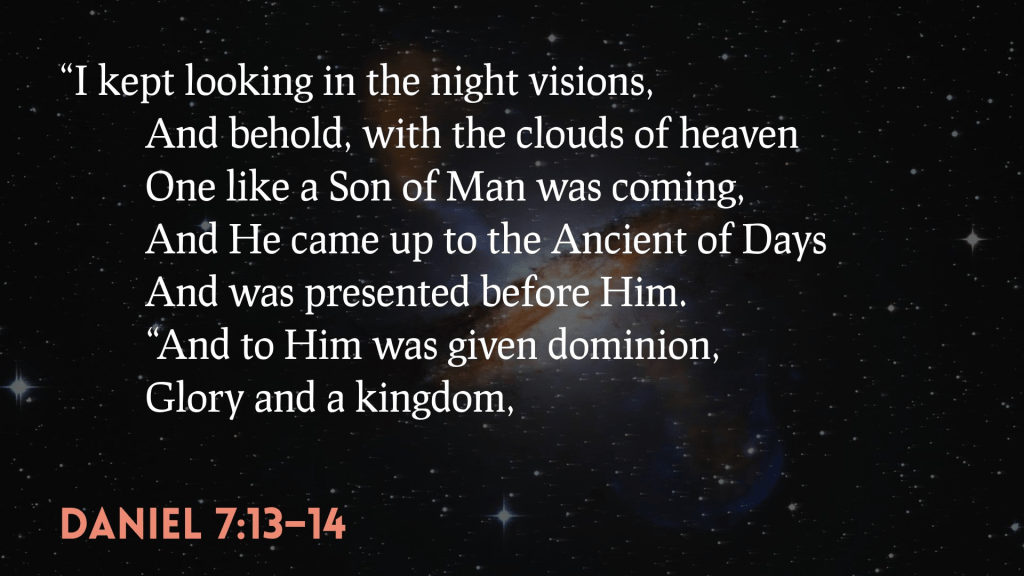
Daniel, (the man greatly beloved), was blessed with the ability to receive and interpret divine visions and dreams. In one of these visions, he witnesses God the Father sitting on His throne as the Ancient of Days. He then sees the preincarnate Christ as One Like the Son of Man riding on the clouds enter into the throne room to receive His kingdom and authority. Only a few persons on earth have been given access to view the scenes of heaven. Daniel joins the prophets Ezekiel & Isaiah, and the Apostle John in the small club of persons who were given a vision of God’s heavenly throne room. Their visions are very similar in the descriptions of what they had witnessed. Their descriptions of the glory of God seated on His throne matches Daniel’s description of the Ancient of Days:
“I kept looking Until thrones were set up, And the Ancient of Days took His seat; His vesture was like white snow And the hair of His head like pure wool. His throne was ablaze with flames, Its wheels were a burning fire,” (Dan. 7:9).
He has another vision of the Son of God, in His preincarnate shekinah glory:
“I lifted my eyes and looked, and behold, there was a certain man dressed in linen, whose waist was girded with a belt of pure gold of Uphaz. His body also was like beryl, his face had the appearance of lightning, his eyes were like flaming torches, his arms and feet like the gleam of polished bronze, and the sound of his words like the sound of a tumult. Now I, Daniel, alone saw the vision, while the men who were with me did not see the vision; nevertheless, a great dread fell on them, and they ran away to hide themselves,” (Dan. 10:5-7).
For deeper instruction and a comparison of these visions view my article “Reading the Bible: The Visions of Heaven,” with this link: https://teachhosea46.com/reading-the-bible-the-visions-of-heaven/. The significance of Daniel’s vision of the Ancient of Days is that Daniel saw two persons of the Trinity, the Father and Son, in the heavenly throne room during the era of the Old Testament. There are a few verses in the Old Testament in reference to the Trinity, and more specifically to the Father and Son which the Jewish theologians referred to as the Two Powers doctrine. This doctrine is a means to explain verses, such as this one in Daniel, that present two divine figures who both possess the attributes of God. What Daniel witnesses is the Son receiving His kingdom, glory, and dominion from the Father. This anticipates the advent of Christ where He brings in the kingdom of God, and He now reigns over His kingdom. For greater insight into Daniel’s vision, a citation from Tremper Longman’s “How to Read Daniel” is presented below.
“We are now in a courtroom and are first introduced to a figure referred to as the Ancient of Days.
Longman, T., III. (2020). How to Read Daniel (p. 100). IVP Academic: An Imprint of InterVarsity Press.
The scene is a courtroom, but this is not any ordinary courtroom. The centerpiece is the throne of the Ancient of Days, a title that indicates a person of great antiquity. As such he is described as having white hair. He is also wearing a white robe. His throne is engulfed in flames, fire is often associated with the appearance of God, and indeed, this figure can only be taken to refer to God himself. But then something totally unexpected occurs. Into the presence of the Ancient of Days steps “one like a son of man, coming with the clouds of heaven” (7:13). Who is this figure? Thus, to ancient readers this human-like figure was God himself riding into the presence of the Ancient of Days, also God himself, after achieving victory over the beasts. No wonder this passage is cited so often in the New Testament in reference to Jesus, God’s Son and God himself.“
 Hosea 4:6 Teaching Ministry