

Introduction
For those unfamiliar with the Bible a little background information is needed for understanding the Gospels. The Bible is divided into two parts, the Old and New Testaments. The Old Testament is a record of the events from creation to the time before Christ. The New Testament includes the events surrounding the life and ministry of Jesus, followed by the teachings and commentary explaining their significance. The Gospels are the first four books of the New Testament written by His apostles and they are in essence four separate accounts of the teachings and events in the life of Jesus. With their placement at the beginning of the New Testament, they act as a bridge between the testaments by connecting the prophecies of the Messiah in the Old, with the arrival of the Messiah in the New. They are more than a biography of Jesus; they are the actual chronicles of those chosen to accompany Him during His three-year public ministry. They lived with Him and followed Him as His disciples, and as He instructed them on the gospel message that they were to teach and preach as they carried on His work following His death. This enabled them to be eyewitnesses to the events and miracles which He performed, and which verified His identity as the Messiah, and the Son of God. An example is the Transfiguration, where the Apostles Peter, James, and John witnessed Jesus transform into the majesty of His glory, “And He was transfigured before them; and His face shone like the sun, and His garments became as white as light,” (Matt 17:2).
The gospels are well known, even by unbelievers for the rich teachings and words of Jesus which have become common terms used by many, such as “you reap what you sow,” “turn the other cheek,” “love your enemy,” and the Golden Rule, “do unto others, as you would have them do unto you.” These and many others are the treasures of wisdom that you will find in the Gospels.
Purpose of the Gospels
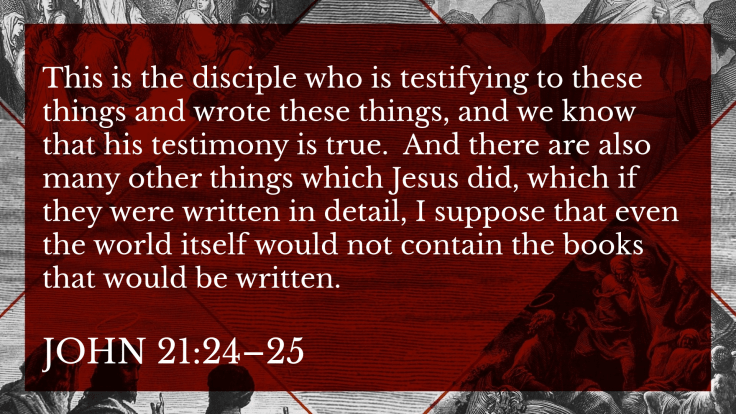

The Gospel writers speak for themselves when it comes to explaining their purpose for writing their books. In the verses above, Luke and John express their purposes for documenting the stories and accounts of the life of Jesus. Luke writes that after investigating these stories about Jesus from eyewitnesses, he found it necessary to write them out in the order that they happened so that the exact truth can be known and taught. The Apostle John writes that he testifies to the truth of the accounts written in His gospel. His words are written in the form of an official court document where he is swearing to the facts recorded through his testimony to the world.
The fact that the Gospels are presented in four separate eyewitness accounts is an important aspect as to their purpose. Jewish law as written in the Old Testament required the testimony of at least two witnesses as evidence in order to confirm the truthfulness of a matter, (Deut. 19:15, Num. 35:30, Matt. 18:16). Here, the Gospels present the testimony of four witnesses to confirm the truth concerning the ministry of Jesus Christ. The wisdom in presenting the Gospels in four separate accounts of witnesses is evident even in the present day as many false claims are made by cults claiming that the original teachings of Christ were distorted or corrupted in time by later Church leaders. There is however an unbroken chain of the books passed on from the authors, (Apostles), to their consecutive school of students, who were the early church fathers. This is verified through their writings.
- The Apostle John had the following succession of students: Ignatius, Papius, Polycarp, Iraneus, to Hippolytus. This chain extends from John in the 1st century through 220 CE.
- The Apostle Paul’s chain begins with Linus in 70 CE, to Clement, Evaristus, Alexander, Sixtus, Telesphorus, Hyginus, Pius, Justin Martyr and Tatian 175 CE.
- Likewise, the Apostle Peter’s chain: Mark, Anianus, Avilus, Kedron, Primus, Justis, Pantaenus, Clement, Origen, Pamphilus, and Eusebius 385 CE.
Witnesses to the World

Jesus led and trained His disciples with the message of His Gospel concerning His life, death, and resurrection that they were to record and proclaim as His witnesses in Jerusalem, Judea, Samaria, and then on to the rest of the world.
Interpreting the Gospels
Whether you are engaged in bible reading or bible study, proper interpretation of the material magnifies your understanding of the Gospels. Learning rules and guidelines for properly understanding the gospel literature before reading it will enrich your reading and study greatly.
The Gospels are their own unique genre of literature composed of a blend of other genres such as historical narrative, parable, discourse, biography, and theological literature. These genres are combined to create the gospel genre which is defined as any work dealing with the birth, ministry, suffering, death, and resurrection of the Messiah. The authors carefully crafted their material to present the “good news” of salvation and to call people to faith in Jesus Christ, the risen Lord and Savior.
The four Gospels are to be understood as a four-part composition forming one Gospel, the Gospel of Christ. Each author presented his own unique perspective of Jesus, (inspired by the guidance of the Holy Spirit), tailored for the audience that they were writing to. Their Gospels teach four truths concerning Jesus as the Messiah:
- Jesus is the Messianic King
- Jesus is the Suffering Servant
- Jesus is the Son of Man
- Jesus is the Son of God
It is helpful to understand the gospels as the accounts of four witnesses to the same event. Each description varies according to individual character and viewpoint of the witness. Therefore, there may be differences in each account of the same event because each witness observes and recalls certain aspects differently, just as witnesses to a crime or accident will give different accounts of the same incident. Three of the Gospels are very similar in their presentation of the material because they share common stories and events. They are called the Synoptic Gospels because of their interrelationship. These three include the gospels of Matthew, Mark, and Luke. Johns’ gospel stands separate from the synoptics as he presents different material with a more complex and theological substance. It is known that John wrote his gospel later, after the others were already written and in circulation, so he may have felt it necessary to fill in certain gaps with important material.
As you read the gospels remember the truths that the authors are trying to teach. The primary form of the gospels is narrative, and this is used to tell the story of Jesus so that the audience relates to the message. For example, the Gospel of Matthew was written for Jewish Christians, so Matthew presents Christ as the King of Israel. He utilizes a genealogy of Christ which emphasizes Him as the son of Abraham, and the son of David, thereby focusing on His Jewish roots as the Messiah who is the King of the Jews. The other authors do the same in displaying Jesus according to their perspective.
Because there are four gospels, a method of interpretation is to compare and contrast them. This is known as reading them in a horizontal fashion. There are parallel passages in some of the gospels which tell the same story but from a different perspective. Reading and comparing these stories give a broader understanding to the narrative. Reading them vertically is to read each gospel individually and as a complete unit, mining the riches of the truths revealed by each author. In this method the reader concentrates on the full narrative of the author in order to obtain his theological and historical teachings in its complete form.
Scripture must always be interpreted in light of its historical background and context. It is important to consider the audience that the author was writing to and the circumstances surrounding the people and the time period. The gospel writers were primarily addressing their gospels to the people of Ancient Israel in the 1st Century with a message intended for them. The message however is universal and does apply to all people in all generations, as intended by God and transmitted through the ministry of the Holy Spirit. For interpretation purposes, the literature is better understood as it is seen through the eyes of the original audience and then filtered through a modern-day lens.
The Kingdom of God
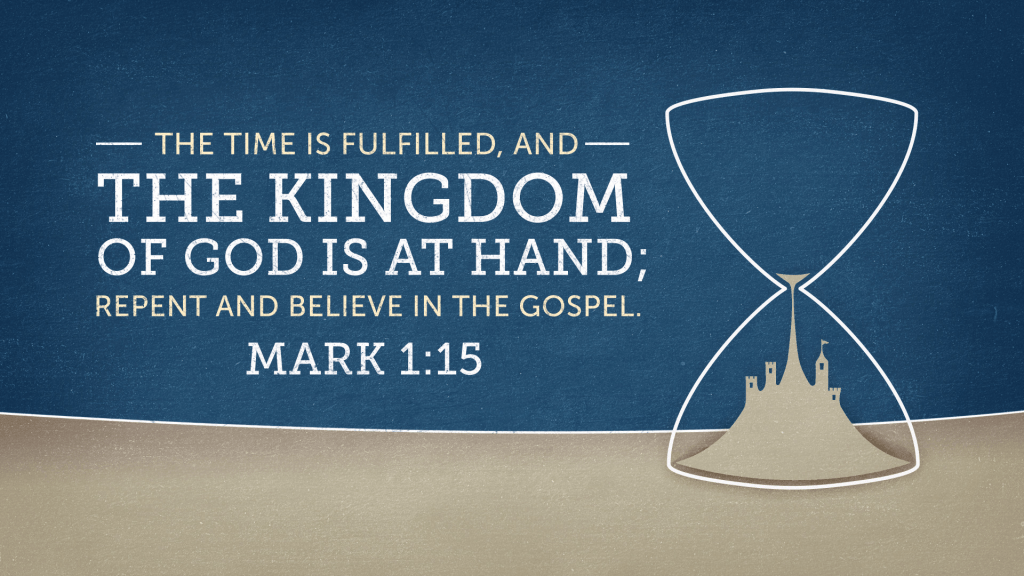
The Kingdom of God is the cornerstone of the teaching of Jesus and the gospels cannot be properly understood without understanding the kingdom concept. The core of the Gospels lies in the teaching of Jesus about the Kingdom of God coming into the world by way of His ministry. The concept of the Kingdom of God was the main message in His teaching which is evident in the majority of His parables. This was an important part of Jesus’ message concerning His work to establish God’s kingdom where He reigns in His role as King, High Priest, and Prophet. In these roles He is administering justice and restoring creation to its original design beginning with His earthly ministry and concluding with His return. To help explain the Kingdom of God, a definition is provided below:
“The Kingdom of God is God’s sovereign reign and rule. God’s reign was the major focus of Jesus’ teaching. Its fullness is in the future, but it has also come in Jesus Himself,” (Westminster Dictionary of Theological Terms).
The Old Testament prophets predicted the coming of a Messiah who would establish God’s Kingdom on earth and uphold it with justice and righteousness, (Isaiah 9:6-7, Dan. 7:13-14, Micah 4:7). “And to Him was given dominion, Glory and a kingdom, That all the peoples, nations and men of every language Might serve Him. His dominion is an everlasting dominion Which will not pass away; And His kingdom is one Which will not be destroyed,” (Dan. 7:14). Throughout the pages of the Gospels, Jesus proclaims that these prophecies have been fulfilled in Him. Most biblical scholars would agree that the Kingdom of God was the central and most important message in the teachings of Jesus. Its importance made it the dominant theme of the preaching and teaching of Jesus’ Apostles as He instructed them and sent them out to proclaim the Kingdom of God, “And He called the twelve together, and gave them power and authority over all the demons and to heal diseases. And He sent them out to proclaim the kingdom of God and to perform healing,” (Luke 9:1-2). They were also given authority and power in which to authenticate the ministry of Christ.
Parables
The parables were used by Jesus to communicate a truth through a story. In the parables of the Gospels Jesus would illustrate the kingdom through a moral or spiritual lesson. He would begin His parables with, “The Kingdom of God is like a ____.” An example is the parable of the Mustard Seed, “The kingdom of heaven is like a mustard seed.” These parables made the listener search for the intended meaning. The reader can get a better understanding of the kingdom by connecting the parables together like connecting the pieces of a puzzle to form a complete picture. The parables are to be read in context to the ministry of Jesus and His establishment of God’s Kingdom on earth.
Matthew

Matthew the Apostle known as the tax collector who left behind his lucrative trade when He was called by Jesus to follow Him is the author of his gospel. Matthew wrote his gospel to the Jewish Christians where he presents Jesus the Messiah as the King of the Jews inheriting the throne of King David, and teacher of the law. His gospel is known for its long dialogues such as the Sermon of the Mount, and the Parables of the Kingdom. The central theme is that Jesus is the Jewish Messiah who brings salvation history to its climax and saves His people from their sins.
Mark
The Gospel of Mark was written by John Mark who is known as the traveling companion of the Apostle Paul, and also as the companion and secretary to the Apostle Peter. Mark’s gospel is believed to be the account of Peter and transcribed by Mark. His gospel presents Jesus as the Suffering Messiah who conquers through His death. He writes to a Roman Christian audience in order to encourage and fortify them through their suffering and persecution. The theme of his gospel is that Jesus the Messiah and Son of God, obediently suffers as the Servant of the Lord to pay the ransom for the sins of the people, and as a model of suffering and sacrifice.
Luke
Luke was a physician and a companion of the Apostle Paul, and the only Gentile among the Gospel writers. Paul is considered to be the source of Luke’s gospel. The Gospel of Luke introduces Jesus the Messiah as the Son of Man, emphasizing His humanity. Luke writes to a Greek Gentile audience presenting Jesus as the savior of all mankind. His message was that God’s plan of salvation is fulfilled in the life, death, and resurrection of Jesus. He focused his gospel on the relationships between Jesus and those who were oppressed such as the widows, the poor, and the outcasts of society. His central theme is that Jesus is the fulfillment of the predictions of the prophets concerning God’s end-times salvation, and that this salvation is now going out into the whole earth.
John

John the Apostle is the author of the gospel which bears his name and the same author who wrote the book of Revelation. His gospel is directed to all of mankind where he stresses Jesus the Messiah as the Son of God, focusing on His deity. John’s gospel is the most complex and theologically rich of all the gospels. He includes the theology of Christ as the eternal Logos or Word and the preexistent creator of the universe. His inclusion of the “I am” statements, (“I am the good shepherd, I am the bread of life,” etc.), are meant as theological metaphors that present a greater truth concerning the identity of Jesus. John’s gospel presents the theme that Jesus is the divine Son of God who reveals the Father, and who provides eternal life to all who believe in Him.
Summary
The Gospels are the collected works of four of the Apostles, who as eyewitnesses to the events surrounding the birth, life, death and resurrection of Jesus, recorded them as evidence of their truthfulness. The work of Christ on the cross brings salvation to all those who believe and have faith in Him, as He is still present among us through His resurrection. The Gospel of Christ has been passed on from the Apostles, and to generation after generation to give the Good News that the promised Messiah has come and the Kingdom of God is at hand—rejoice and believe!
What further evidence could we desire of his fervent and unbounded charity, than that he willingly laid down his life even for his most bitter enemies; and, mingling his prayers with his blood, besought the Father that his death might not be laid to their charge, but might become the means of eternal life to those very persons who procured it?
Henry Scougal, “The Life of God in the Soul of Man.”
Reference

Excellent resource for those who wish to expand their knowledge and understanding of Jesus and His ministry. Strauss presents the four Gospels as four accounts of His life and works to form a more accurate portrait of Jesus. His research into each gospel and the historical background of Jesus provide fascinating teaching for those who wish to go above and beyond in their understanding of our Lord and Savior.
 Hosea 4:6 Teaching Ministry