Zechariah’s Vision of the Angel of the Lord and the Angelic Riders
In our continuing study of the visions of the prophets, we place our focus on the first of Zechariah’s Night Visions. The introduction to Zechariah’s Night Visions contained a brief summary of each of the visions and now we are going to make a deeper study of the first vision to mine the riches of the symbolism contained in the characters, their roles, and the objects in the vision. As stated earlier, angelic beings are a common feature of dreams and visions. They often act as messengers or interpreters for the prophets. In this vision there are various angels performing their duties in the roles assigned to them. This presents a view into the spiritual realm where angels function according to their God given missions and in a type of hierarchy with the Angel of the Lord as their Commander-in-Chief. This study will also consider the views and opinions of various theologians and scholars, including Jewish rabbinical sources, on the vision’s symbolism. The reader should gain a deeper understanding on how to go deeper in the reading and study of visions including researching supporting material from legitimate scholars to enhance their knowledge.
Summary of the Vision
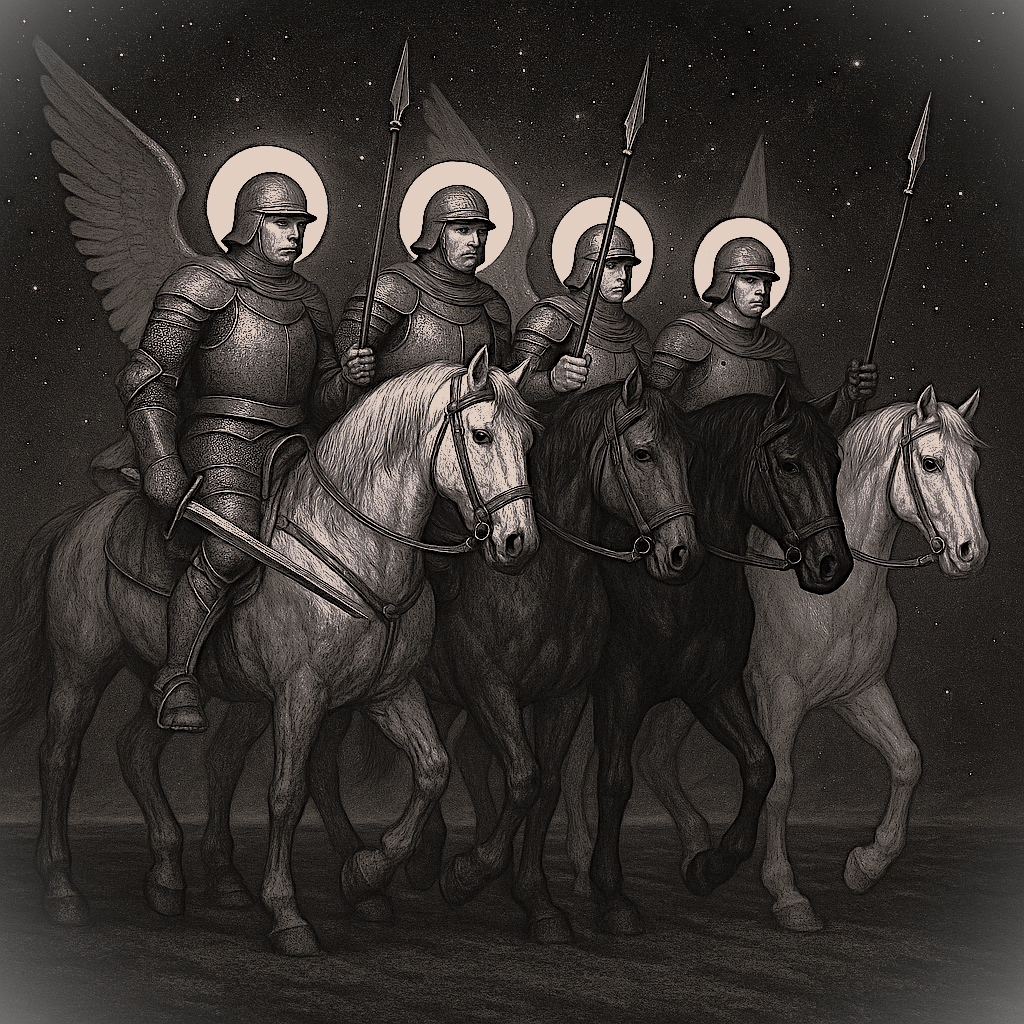
Zechariah is shown an image of a man riding a red horse who is standing in a ravine of myrtle trees, behind him are angels mounted on red, brown, and white horses. The man on the red horse turns out to be the Angel of the Lord, who is the preincarnate Christ, in the role as the Captain of the Lord’s army who commands the mounted angels. The mounted angels are assigned to patrol the earth, and they report their findings to the Angel of the Lord by declaring, “We have patrolled the earth, and behold, all the earth is peaceful and quiet.” The vision is interpreted as a message of hope for Israel as the Angel of the Lord intercedes for the nation and the people expressing His love for them, and in condemning the nations that came against them. The Lord speaks to the repentant Israelites with gracious and comforting words, promising to rebuild the temple and restore Jerusalem.
The Characters in Zechariah’s Vision
The identification of the characters and the roles they play are important to understanding the message of the vision. Also, the reader of Scripture moves into a deeper study when they investigate further into the Bible verse or passage. By examining each character, the student reveals deep truths that bring greater understanding and enlightenment of God’s word. The study of these characters will involve the use of hermeneutics which are principles of proper biblical interpretation. In this instance we will compare and contrast the given verse against other similar verses, and we will search for other verses which apply to the same subject and can help to clarify the verse. The Angel of the Lord is the most important and interesting of the characters, therefore He will receive the majority of our attention.
The Angel of the Lord
As the vision unfolds the identity of the Angel of the Lord is not fully revealed and He is only referred to as “a man riding a red horse.” It is only after three more verses is the reader informed that this man is the Angel of the Lord, “So they answered the angel of the Lord who was standing among the myrtle trees.” This title is used only twice in the verse, and He is referred one other time with the title of Lord. Most readers who are unfamiliar with the identity of this person will miss the significance of His role in the vision and also, they will miss the full context of the message. So, who is this person known as the Angel of the Lord and why is His presence so significant? To answer that question we do a bit of hermeneutical research by searching for similar verses– and we find one in Joshua 5:13-15. Let’s compare the verses below.
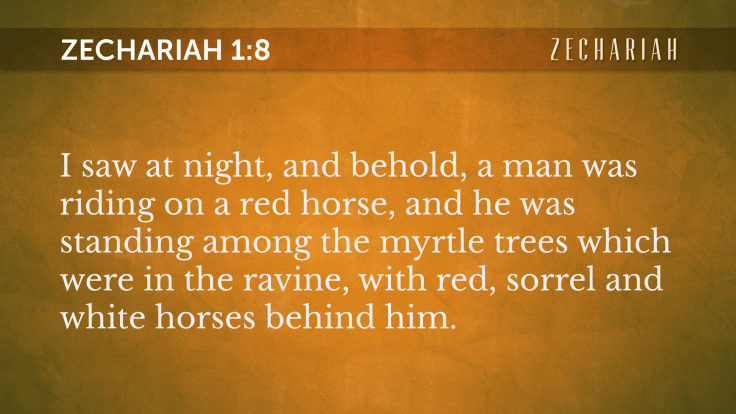
In Zechariah’s vision above, he beholds the man standing among some myrtle trees. In the verse below, Joshua beholds a man who is standing opposite of him with his sword drawn. (Joshua was the leader of the Israelites who succeeded Moses). Back to Zechariah’s vision and we see that the man is later referred to by the proper title of the Angel of the Lord, (verses 11 & 12). In the verses below, the man identifies Himself as the Captain of the Lord’s host, which is also interpreted as the Commander of the Lord’s army. The Angel of the Lord and the Captain of the Lord’s host are identified as titles for the same person.

“Now it came about when Joshua was by Jericho, that he lifted up his eyes and looked, and behold, a man was standing opposite him with his sword drawn in his hand, and Joshua went to him and said to him, “Are you for us or for our adversaries?” He said, “No; rather I indeed come now as captain of the host of the LORD.” And Joshua fell on his face to the earth, and bowed down, and said to him, “What has my lord to say to his servant?” The captain of the LORD’S host said to Joshua, “Remove your sandals from your feet, for the place where you are standing is holy.” And Joshua did so,” (Joshua 5:13-15).
Another similarity we notice is the worship and honor that is paid to the Angel of the Lord. In Joshua’s encounter with Him, we see Joshua bow down and give Him worship that it is only offered to God. In Zechariah’s vision the Angel is referred to as Lord in verse 13 as He speaks to the interpreting angel. Later in verse 16, speaking as the Lord He says that He will return to Jerusalem and build His house there, referring to the rebuilding of the Temple and the return of His glory to it. There is another similarity that we notice between the two passages pertaining to the office that the Angel of the Lord assumes in both, He is the commander of the Lord’s army. He declares this to Joshua, and it is revealed in Zechariah’s vision by His sending of the patrolling angels and their reporting their findings back to Him. The mystery of the Angel of the Lord continues as we find another verse in the book of 2nd Kings with a similar warrior angel who is also called the Angel of the Lord.
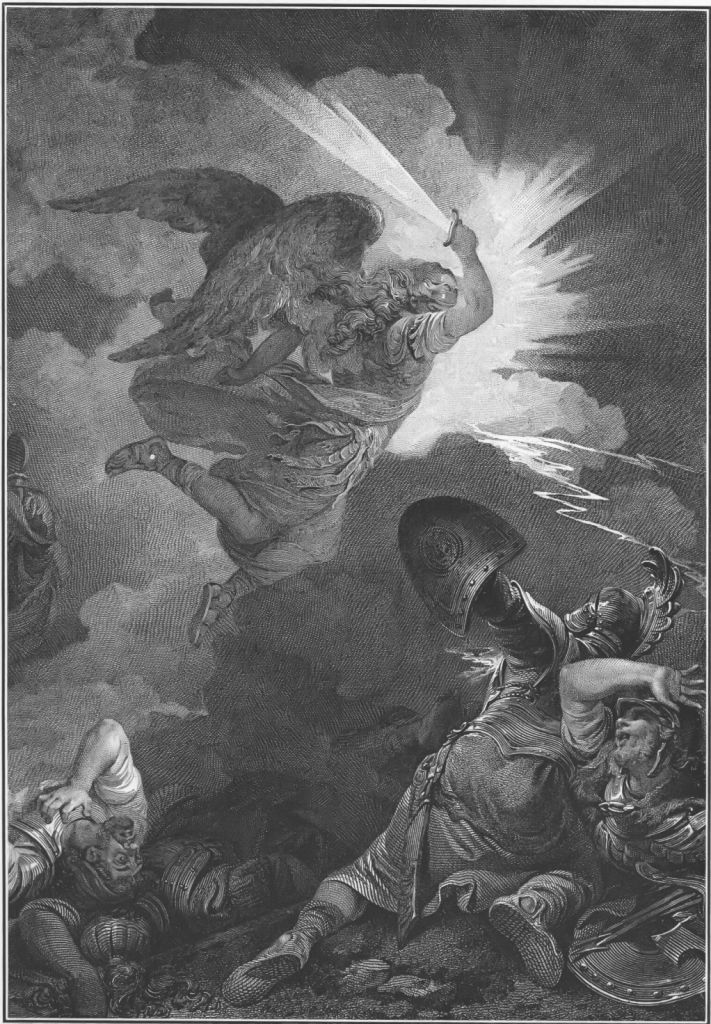
“Then it happened that night that the angel of the LORD went out and struck 185,000 in the camp of the Assyrians; and when men rose early in the morning, behold, all of them were dead,” (2Kings 19:35)
This account in (2Kings19:35) occurs centuries after the encounter with Joshua and centuries before the vision of Zechariah, which displays the work and involvement of the Angel of the Lord throughout the Old Testament. In the account from 2Kings above, we see this mighty warrior angel, the Commander of the Lords army, act on behalf of Israel as their defender when He struck down 185,000 Assyrian soldiers who were about to attack Jerusalem. At this point we can conclude that the Angel of the Lord is the Commander of the Lord’s army, that He is extremely powerful, and that He is worshiped as only God is worshipped. We continue our investigation and recognize a familiar verse that we have seen before, ““Remove your sandals from your feet, for the place where you are standing is holy.” And Joshua did so,” (Joshua 5:15).
Our search brings us to the following verse in the book of Exodus which describes the encounter between Moses and the appearance of God in the burning bush, “Do not come closer,” He said. “Remove the sandals from your feet, for the place where you are standing is holy ground.” Then He continued, “I am the God of your father, the God of Abraham, the God of Isaac, and the God of Jacob.” Moses hid his face because he was afraid to look at God,” (Ex. 3:5-6). A few verses prior we notice that God who establishes His identity is also called the Angel of the Lord, “Then the Angel of the LORD appeared to him in a flame of fire within a bush. As Moses looked, he saw that the bush was on fire but was not consumed, (Ex. 3:2).
There is still one more question that must be answered concerning the identity of the Angel of the Lord; In what sense is He God? In other words, how does He fit into the Triune Godhead; Father, Son, and Holy Spirit? To begin with we see that the Angel of the Lord exists in the form of the manifested presence of God as a man. Another clue is that His role in the Old Testament accounts is that of a warrior and the Commander of God’s army. We further observe that there is only one member of the Trinity who is pictured in New Testament prophecy in a similar role. This is of course the person of Jesus Christ as seen in the visions of the Apostle John in the book of Revelation.
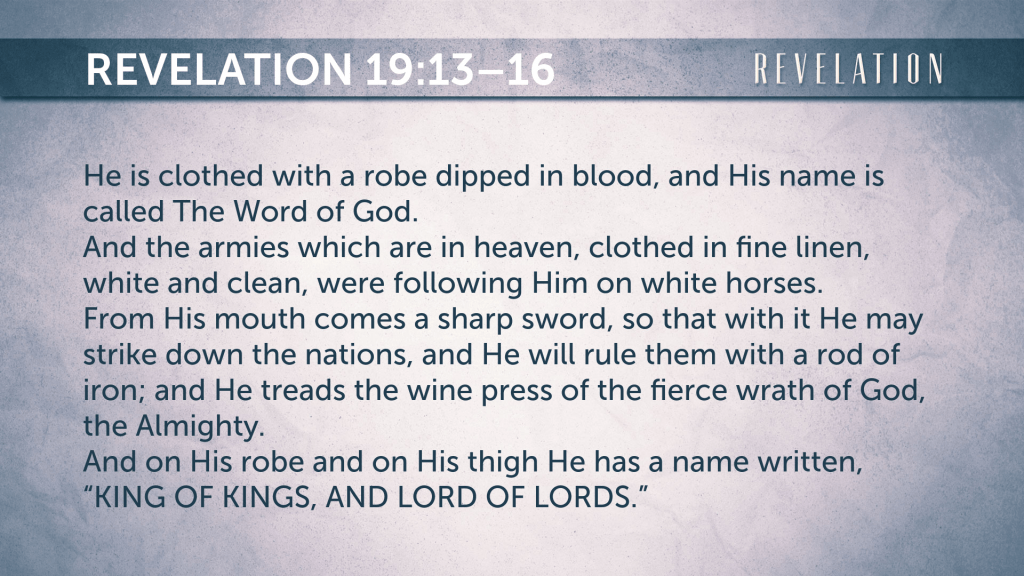
This verse seems to support the view that the preincarnate Christ, the 2nd person of the Trinity, is the Angel of the Lord. There is another aspect of biblical research the must be completed in order to verify our findings. We can access the research and conclusions from reputable and trustworthy sources. These are scholarly and academic works such as theology texts, theological dictionaries and encyclopedias, scholarly journal articles, and biblical commentaries. If our research is correct, then we should find a majority of these sources in agreement with our conclusion. As an example, here is the opinion of Prof. Daniel Finestone regarding the Angel of the Lord which agrees and confirms our own findings.
“We have seen that all appearances of the Angel of the Lord were related to some phase of the redemptive program of God through Israel. This plan was consummated in the appearing of the Lord Jesus Christ. Both the Angel of Jehovah and the Lord Jesus Christ were engaged in the same activity, the salvation of man; the One working in the Old Testament times, the Other in New Testament times. How reasonable to recognize these two as being identical.“
(Finestone, D. (1938). Is the Angel of Jehovah in the Old Testament the Lord Jesus Christ? Bibliotheca Sacra, 95, 377).
We also have verification in the research of Prof. Charles Lee Feinberg.
“The report of the angels follows immediately in answer to the unexpressed word of inquiry from the Angel of Jehovah: “And they answered the angel of Jehovah who stood among the myrtles, and they said, We have walked to and fro in the earth, and behold, all the earth sits and is at rest” (v. 11). This Angel of Jehovah is none other than the preincarnate Christ.”
(Feinberg, C. L. (1940). Exegetical Studies in Zechariah. Bibliotheca Sacra, 97, 439).
SUCCESS! Our dedication to study and persistence for deep truths has yielded rewards. We have identified the mysterious Angel of the Lord and established that He is God Himself in the person of the preincarnate Christ. The Angel of the Lord will make an appearance again in Zechariah’s fourth Night Vision where He assumes the role of presiding judge over the Divine Council where Joshua the High Priest is being accused by Satan. The Angel of the Lord, now called the Lord, reprimands Satan and defends Joshua. The Lord then orders Joshua’s filthy garments, (representing his sin), to be removed and replaced with clean garments. The Lord then announces that He has taken away Joshua’s sin and clothed him with righteousness. Interestingly, in this vision we see the future work of Christ through the double-imputation, where the sin of believers is removed and imputed to Christ as He died on the cross, and His righteousness is placed on the believer through faith.
The Interpreting Angel
The interpreting angel acts in a secondary role along with the patrolling angels, but they each have specific roles. The interpreting angel acts in the primary role of angels as messenger. In Zechariah’s visions this angel is usually identified with the phrase, “the angel who was speaking with me.” The office of the interpreting angel is to bring instructions to the prophet and to explain the meaning of the visions to him.
The Patrolling Angels
The patrolling angels present a different aspect of the role of angels due to their status as warriors and members of the Lord’s army. This vision gives mankind a peek behind the veil of the spiritual realm where angels operate behind the scenes as they carryout God’s directives and minister to humans. This is displayed as the Lord states that the patrolling angels are those that He has sent on their mission to patrol the earth, and they report back to Him that they have just completed their mission, and the earth is at peace. This vision is related to Zechariah’s eighth vision of The Chariots, where we encounter the horses and patrolling angels who are described as “the four spirits of heaven.” In this vision we see the patrolling angels sent on another mission to patrol the earth, but this mission includes delivering a judgment on a land of the north where they bring the Lord’s wrath against an enemy of Israel, “Then He cried out to me and spoke to me saying, “See, those who are going to the land of the north have appeased My wrath in the land of the north,” (Zech. 6:8).
The Horses
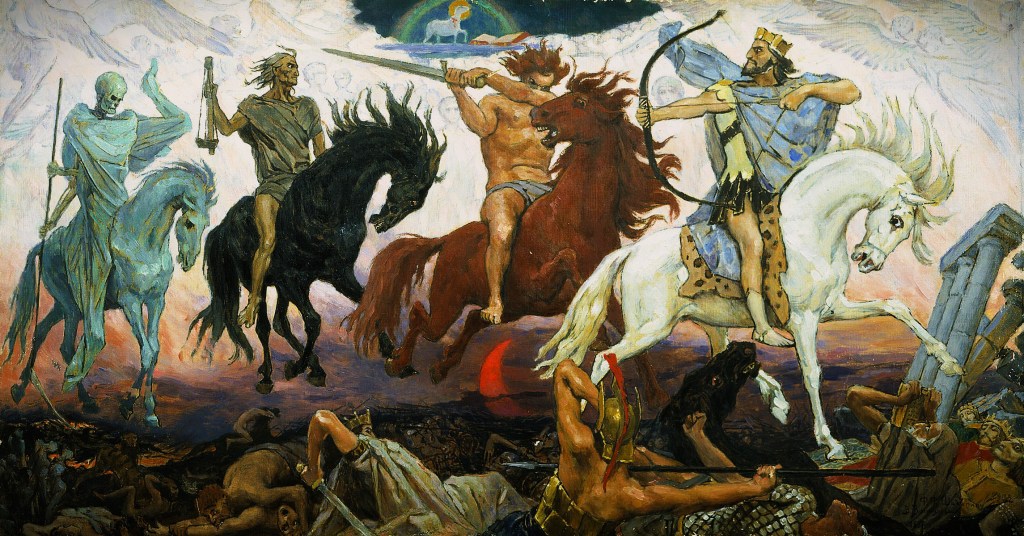
Here, we again see a connection to the eighth vision where there are various colored horses attached to chariots. In the first vision the horses are red, white, and brown in color; and in the eighth vision they are described as red, white, black, and spotted. The objects contained in visions often have some type of significance, but the vision does give any to the color of the horses. We do find symbolism placed on their colors from biblical commentators and ancient rabbinical sources. According to these sources, white symbolizes victory, triumph, and glory. This is seen in the vision of Christ riding on a white horse as He is riding toward the final battle to destroy His enemies in the book of Revelation. Red portrays blood, judgment, and vengeance. These interpretations may have been taken from the description of the Four Horsemen of the Apocalypse in Revelation. Their horses are described as red, white, black, and gray with a meaning given to each rider. The rider of the white horse represents conquest, the rider of the red horse brings war, the rider of the black horse is famine, and the rider of the pale or gray horse brings death.
Conclusion
In this exposition of the first of Zechariah’s Night Visions, the reader and bible student is presented with a teaching on the interpretation of prophetic visions. It was demonstrated that deep study and research can yield great rewards. Aspects that are not apparent in a casual reading of the material are discovered through this type of study. This leads to greater insight into the riches of the Word of God which brings wisdom to the believer. The process of interpretation was given step by step in the explanation of the Angel of the Lord as a template for future study. Read, study, and enjoy God’s Word!
 Hosea 4:6 Teaching Ministry