THE DOCTRINE OF SIN

“Original Sin is the teaching that through the disobedience of Adam and Eve all of humanity has inherited the effects of their sin. After the Fall, Adam and all of his descendants (all of mankind) have fallen into a state of corruption with a nature that is inclined toward sin. The disobedient act of Adam and Eve is rebellion against God and as a result the relationship with God has been severed causing man to be alienated from God. It is only through the work of Christ on the cross that man and woman are reconciled to God.”
Sin, Redemption, and the Gospel
The importance of sin and its effect on mankind is often understated or even ignored. The Gospel Message and the whole Drama of Redemption from the creation to the end times centers on the consequences of sin on humanity and the whole of creation. The gospel message is about the redemption of man through the death and sacrifice of Christ. In other words, mankind has been saved by the Son of God. But many may ask, “What is he saved from?” The answer of course is sin. More precisely he is saved from the penalty of sin, which is death.

The Doctrine of Sin must be considered in light of the Doctrine of Redemption and the Gospel Message. The Gospel message is that Christ died to pay the penalty for the sins of mankind. Without the consequences of sin there is no need for redemption. The Bible from beginning to end is the drama of redemption. Beginning with the Fall of Man by the disobedience of Adam, to the redemptive work of Christ, and finally to the complete victory over sin and death with the return of Christ and the destruction of the world—sin is the main villain in the drama. Sin is man’s mortal enemy and the cause of his destruction. God is the hero in the drama as He sends His son, Christ, to save man and to restore creation from the corruption caused by the effects of God’s wrath against sin and rebellion. Mankind’s redemption and salvation by the grace of God and the work of Christ can only be properly understood by comprehending the seriousness of sin.
Understanding Sin
The definition of sin covers many concepts and ideas due to the broad scope of issues related to sin. Scripture makes use of many different terms when referring to sin such as rebellion, transgression, iniquity, wickedness, lawlessness, chaos, death, evil, and disobedience. While the definition of sin can be lengthy, a brief definition with the four most used descriptions is provided here for reference.
- Sin is any transgression of the law of God.
- Sin is a lack of conformity to the moral law of God, either in act, disposition, or state.
- Anything in the creature that is contrary to the holy character of the creator.
- Sin is the human condition of separation from God that arises from opposition to God’s law. It is a failure to do what God wills or rebellion against God’s rule and reign.
(Note-there is a greater list of definitions at the end of the teaching for a greater understanding of sin.)
Sin can be seen merely as an injustice, an act of wrongdoing, disobedience, or lawlessness against proper authority. However, sin is a much deeper offense because it is a violation against the person and governing rule of God. God in His Holiness is offended by sin because He is perfectly good and cannot tolerate evil. In His attribute of being perfectly just–He must punish sin through His wrath. Rebellion against the King creates chaos in his kingdom and therefore the lawbreakers must be punished. God is a God of order, not disorder. His work of creation was created good and was a place of order, but it was corrupted by sin, and it fell into disorder. Through His grace and His love for humankind He brought order back to His creation through the work of His son. Disorder remains but it does not rule. Complete restoration of creation and order will be completed with the return of Christ. Comprehending sin against this background presents it in the biblical view as an offense against a Holy God.
Origin of Sin

Original Sin
As the verse above states, sin entered the world through the disobedience of Adam and with it came death. The result was that all men inherited sin and its penalty, death, because all men have sinned. In the opening paragraph the doctrine of Original Sin is presented. To summarize, Original Sin is the concept that sin entered the world through the disobedience of Adam and Eve when they violated God’s direct command to not eat the fruit from the tree of the knowledge of good and evil. As a result, Adam’s punishment affected not only him, but also all of his descendants. Adam’s nature was now inclined toward sin, which means that his heart has turned from love of God to love of self. He, and all of humanity that proceeded from him, now possess a sinful nature where they are in bondage to sin. They are captive to their own selfish desires which breeds sin. Underlying Adam’s decision to disobey God’s command is human free will. Adam having the free will to sin or not sin–chose sin. Free will has also been passed on to Adam’s offspring. Though sin entered the world through Adam’s transgression and sin has corrupted God’s creation, this was not the state of God’s original creation. God’s creation was made good, and man was created in a state of righteousness. God is not the author for the evil that has fallen on the corrupted creation, so those who blame Him for the world’s evil and suffering are in error. It must also be remembered that it was God Himself who redeemed mankind on the cross at Calvary.
The Heart
While sin entered the world through Adam it operates in persons through the heart. The heart is the origin of man’s sin as it controls the will and emotions.
“For out of the heart come evil thoughts, murders, adulteries, fornications, thefts, false witness, slanders.”
(Matt. 15:19).
The verse above, (Matt.15:19), is but one of Jesus’ many teachings on sin where He traces it to the human heart. In His Sermon on the Mount, (Matt. 5:21-30), He teaches that the sin of murder has already been committed when it begins with anger, and that adultery is committed when it begins as lust. Anger and lust proceed from the heart and it is there that they are already viewed as sin. True righteousness must exceed the righteousness of the Pharisees who strived to keep the law and refrain from sinful acts. Jesus’ teaching is that righteousness is more than outward obedience, it requires an inward transformation of the heart which is the birthplace of sin. The transformation of the heart requires a turning away from the self and turning towards God, so that obedience stems from the love of God and the desire to please Him. The turning of hearts is the ministry of the Spirit in regeneration which was actuated following the atoning work of Christ. Understanding the origin of sin reveals the need for faith in Christ and the work of the Spirit to target the source, which is the heart. In support of this interpretation of Matt. 5:21-30 is a section from the Cornerstone Biblical Commentary on Matthew.
“The Greater Righteousness Taught by Jesus. It is clear in each of the first three examples of Jesus’ teaching that his standards were higher than those of the traditional interpreters of the law. In the first two examples, Jesus goes to the heart of the matters of murder and adultery—anger and lust. It is not that the Old Testament does not condemn anger and lust, but that Jesus’ definitive teaching connects the outward behavioral symptoms with the inner attitudinal causes. Jesus means to nip the buds of anger and lust in order to avoid the blooms of murder and adultery.”
(Turner, D., & Bock, D. L.,) Cornerstone Biblical Commentary, Vol 11: Matthew and Mark (p. 91).
The Power of Sin
“For the good that I want, I do not do, but I practice the very evil that I do not want. But if I am doing the very thing I do not want, I am no longer the one doing it, but sin which dwells in me.” (Rom. 7:19-20)
“but I see a different law in the members of my body, waging war against the law of my mind and making me a prisoner of the law of sin which is in my members.” (Rom. 7:23)
The power of sin is at work in all people during the entire course of their lives. Believers are not exempt from the struggle with the power of sin. The difference between believers and unbelievers is that believers have been freed from the bondage to sin. Bondage to sin means that apart from Christ and the work of the Holy Spirit, persons have their wills inclined toward sin and are unable to resist its temptations. Believers are no longer controlled by the desire to sin but they will struggle with the remnants of sin that remain in their bodies of flesh, which is the shadow of sin that has left its imprint in the mind. This is the purpose of the sanctification process which is the transformation of the mind to become conformed to the image of Christ. The Christian will always be engaged in a battle with the world, the flesh, and the devil.
The Apostle Paul gives us insight into the power of sin when he declares that, “there is none that are righteous,” (Rom. 3:10), and “for all have sinned and fall short of the glory of God,” (Rom. 3:23). He also reveals his own struggle with the power of sin in the above two verses, Romans 7:19-20, and 23. He describes a war that is being waged within himself where he engages in sin even though he desires to do good because of the sinful temptations that reside in him. Paul is using himself as an example of what all believers will encounter as they work through their own sanctification. All Christians will struggle with the power of sin as they strive to imitate Christ and be Christlike in righteousness.
Consequences of Sin
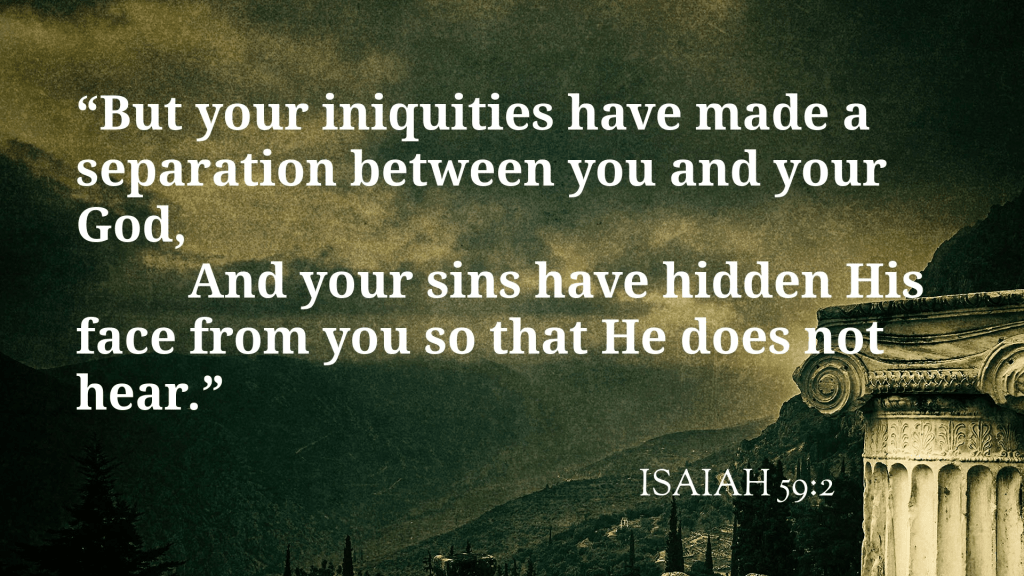

The consequence of sin upon the world brought it into a state of corruption. Death, decay, and pollution would affect every aspect of creation replacing the paradise of Eden. Joy, comfort, and peace would be replaced by evil, lawlessness, and suffering. Men and women would now experience death; physical, spiritual, and eternal. Physical death is the separation of the spirit from the body, while spiritual death is the separation of God from man. Because man is in a sinful state of rebellion he is separated from the presence of God and considered an enemy, (Rom. 5:10). Another aspect of this separation is that God conceals Himself so that He is deaf to the pleas and petitions of men and women, (Isaiah 59:2). These penalties for sin are a result of God’s divine judgment through His judicial wrath on sin. Sinful disobedience is an attack on God’s righteous character which requires justice through His perfect holiness.
The punishment of sin on mankind can be summarized in the following three stages of death.
- Physical Death- Cessation of the union of the physical body and the spirit.
- Spiritual Death- Cessation of communion with God. Our conscience reminds us of guilt, and the fear of punishment fills the heart.
- Eternal Death- The completion of spiritual death. The full weight of God’s wrath falls on the condemned as they experience eternal separation from God.
Solution for Sin
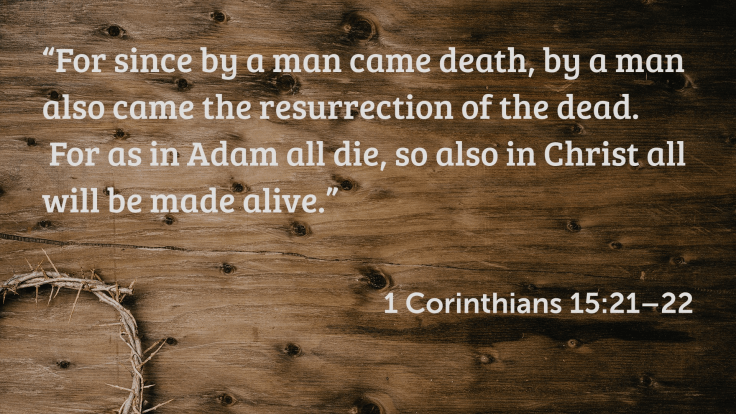
“Through the sin of Adam, sin and death entered the world. It is through the atoning death of Christ that the punishment for sin is paid, and mankind is made alive and returned to peace and fellowship with God.“
Sin and its penalty affect all people, at all times, and in all places. Likewise, the solution for sin must also work for all people regardless of their religion, their beliefs, or their unbelief.
For those who hold to Eastern religious views or New Age beliefs then there is no need for a solution because sin does not exist. They believe that all is god and god is all, (pantheism). Since everything is God there is no evil therefore sin does not exist.
The same is true for the followers of the Christian Sciences religious groups where no solution is needed because there is no sin. Only God exists and since he is good, only good can exist, so death, matter, evil, disease, and sin are only an illusion.
Regardless of these belief systems, it is apparent that sin and its effects are real. It is also true that they are sinners who are under the penalty of sin whether they believe it or not. God’s wrath will fall on them unless they receive redemption. Scripture is clear that redemption is only possible through Christ. The teachings of the Apostle Paul are very clear that all men have sinned, and death has spread to all— he made no exceptions. The Gospel Message and the Drama of Redemption reveal the problem of sin but they also provide the solution for it. The solution is that man is saved from the consequences of sin through redemption by Christ. With sin as the villain who causes the fall of mankind, it is Christ who emerges as the hero who redeems man through His own death. When Jesus began His earthly ministry of salvation He started by preaching, “Repent, for the kingdom of heaven is at hand,” (Matt. 4:17). Redemption would soon be made possible by His sacrifice on the cross, and access to His redemptive work would be made available through repentance and faith in Him by the believer. The solution for sin is here now for all who believe and have faith in Christ, our redeemer.
Significance in Current Times
The history of the human race records the consequences that sin has produced in the world—death, suffering, pain, evil, lawlessness, and rebellion. These things still exist in our current times. During the last century there have been two major wars, countless others, genocides, slaughters, catastrophes of nature, and recently a rise in corruption and wickedness. Sin exists in every nation, city, household, and heart of every person on the planet. Scripture reveals that the answer for sin is Christ. He has redeemed us and will one day redeem all of creation, by eliminating sin when He returns.
For now, the Doctrine of Sin is crucial for Christians to understand and incorporate in order to direct their lives. The Kingdom of God is the only source of light in this world of darkness. The Doctrine of Sin must be taught and preached throughout the world as a means to confront sin where it lives, which is in the heart. The world is increasing in its acceptance of sin, and the Church is neglecting its responsibility to preach and teach the truth against it. The spread of the Gospel repelled sin and reversed its advance. Now sin is advancing, and the spread of the Gospel is in decline. Only the Word of God, the power of the Holy Spirit, and the work of Christ can overcome the power and the consequences of sin. Spread the Good News, “Repent, for the kingdom of God is at hand,” (Matt. 4:17).

Definitions
Sin: Scripture employs a variety of words to speak of sin, with meanings ranging from ‘the missing of a mark or goal’ or ‘the breach of relationship’ to ‘ungodliness’, ‘perversion’ or ‘rebellion’. Yet the common theme of every biblical expression of the nature of sin is the central idea that sin is a state of our being that separates us from the holy God; biblically, sin is ultimately sin against God. (S.B. Ferguson, New Dictionary of Theology).
Sin: that which is in opposition to God’s benevolent purposes for his creation. According to the biblical writers, sin is an ever-present reality that enslaves the human race and has corrupted God’s created order. The concept of sin is first and foremost a religious concept, because all sin is ultimately against God, God’s laws, God’s creation, God’s covenant, and God’s purposes. It is the basic corrupting agent in the entire universe. (P.J. Achtemeier, Harper’s Bible Dictionary).
Nature of Sin: “Sin” as a characteristic of human beings is manifested in the committing of “sins,” individual acts of rebellion against God and against expressions of his intentions for humanity. Sin is not to be identified simply with violation of the moral standards of society, though individual sins, as violations of the divine intention for human interactions, are violations of human moral standards as well., Rather, sin in its basic sense is always ultimately against God himself rather than against mankind or any human person. (A.C. Meyers, The Eerdmans Bible Dictionary).
Sin: Any thought or action that willfully or even unintentionally breaks God’s law and falls short of God’s design for creation. The Reformed tradition has historically identified pride and unbelief as the root of sin, a manifestation of humanity’s *original sin and continual rebellion against God, which affects all of creation. (K.M. Kapic, Pocket Dictionary of the Reformed Tradition).
Sin: The fundamental unbelief, distrust and rejection of God and human displacement of God as the center of reality. The Bible presents sin as both fallen humanity’s state of separation and alienation from God and as a person’s purposeful disobedience to God’s will as evidenced in concrete thought or act. As an inherent part of the human condition sin is universal, and it is both corporate and individual. (S. Grenz, Pocket Dictionary of Theological Terms).
Quotes Regarding Sin
“Sin clips the wings of prayer so that it will not fly to the throne of grace.”
Thomas Watson
“Though we cannot be altogether without sin, yet we must not altogether leave off to resist sin. Sin reigns where it is not resisted.”
Thomas Manton
“Oh, the depth of the evil of sin! If ever you wish to see how great and horrid sin is, measure it in your thoughts, either by the infinite holiness and excellency of God, who is wronged by it, or by the infinite sufferings of Christ who died to satisfy for it and then you will have deeper apprehensions of the evil of sin.”
John Flavel
 Hosea 4:6 Teaching Ministry